on cultivating doubt

“When there is great doubt” says a Zen aphorism that Kusan Sunim kept repeating,”then there is great awakening. This is the key. The depth of any understanding is intimately correlated with the depth of one’s confusion. Great awakening resonates at the same “pitch” as great doubt.  So rather than negate such doubt by replacing it with belief, which is the standard religious procedure, Zen encourages you to cultivate doubt until it “coagulates” into a vivid mass of perplexity…

Great doubt is not a purely mental or spiritual state: it reverberates throughout your body and your world. It throws everything into question. In developing doubt, you are told to question “with the marrow of your bones and the pores of your skin.” You are exhorted to “be totally without knowledge and understanding, like a three-year-old child.” To pose a question entails that you do not know something…To ask “What is this?” means you do not know what this is.

To cultivate doubt, therefore, is to value unknowing. To say ” I don’t know” is not an admission of weakness or ignorance, but an act of truthfulness: an honest acceptance of the limits of the human condition when faced with “the great matter of birth and death.” This deep agnosticism is more than the refusal of conventional agnosticism to take a stand on whether God exists or whether the mind survives bodily death. It is the willingness to embrace the fundamental bewilderment of a finite, fallible creature as the basis for leading a life that no longer clings to the superficial consolations of certainty.

~Stephen Batchelor, “Confessions of a Buddhist Atheist

3jewels.hardcore

the eightfold path: skillful effort, skillful mindfulness + skillful concentration

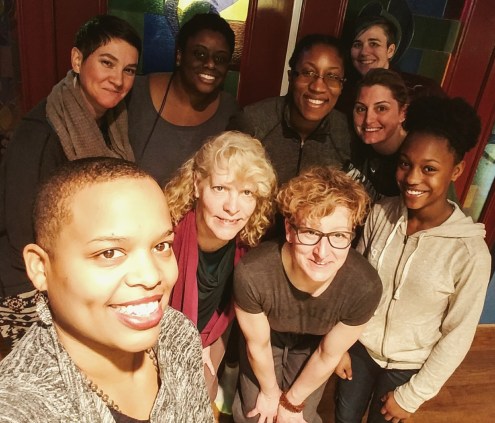
Sangha committed several months to the study of how we “live into community” and the purpose of gathering as spiritual friends to build our capacity for skillfulness and resilience. To that end, we’ve contemplated the Eightfold Path as a set of embodied practices that help us develop wisdom, ethical action, and various faculties that support our meditation.

The Eightfold Path is the fourth of the 4 Noble Truths:

There is Suffering.
There are Causes of Suffering (craving/attachment).
There is an End of Suffering.
The Noble Path is the End of Suffering.


Our journey on the Noble Eightfold Path winds up with three mental faculties — Skillful Effort, Skillful Mindfulness, and Skillful Concentration. With the development of our ability to regulate, shape, and direct the movements of our mind, we harness the power to cultivate and refine the first five “liberating” actions — our understanding, thinking, speech, action, livelihood — that help free us from cycles of suffering and discontent.

Skillful Effort refers to the quality of the energy we apply to our actions (both in meditation and in the world). Are we struggling, feeling sluggish, practicing half-heartedly and part-time, or wrestling with self-defeating patterns of doubt and worry that we’re not getting it right? Are we striving, approaching our practice ambitiously and overzealously, or straining ourselves with self-limiting habits of perfectionism or a goal-oriented mission for self-improvement?

Are we applying skillful understanding of how our brains and bodies function and of the conditions that create fluctuations in our energy so that we can be flexible, patient and gentle? Are we approaching our meditation practice and spiritual development with diligence — lovingly, compassionately, wholeheartedly, consistently, and creatively?

I highlight diligence here because in my study and practice of the 5 Spiritual Faculties, I discovered that, at its root (latin: diligere), it meanslove, take delight in.” Whereas in common usage, we erroneously associate diligence with painstaking, rigorous or arduous work. So this re-claiming and re-imagining of how we use our energy resonates deeply with me. It feels more aligned with the quality of skillfulness, where we take care with how we apply ourselves — balancing the amount of stimulus and ease based on the conditions present — so that we are not creating habit energies of pursuit, ambition, craving, clinging or avoidance, resistance and aversion. And when those do arise, we are able to (re)examine them, readjust and transform them without criticizing or condemning ourselves.

Skillful Mindfulness may seem at first glance like a redundant term because we generally associate mindfulness with being a beneficial or at least “neutral” ability to pay attention. However, as we learn to pay attention to what is arising in body, heart, and mind, there is a possibility of our awareness taking a hue of criticism or hyper-vigilance that becomes unskillful. We lose the quality of ease, non-attachment, and non-judgment when we begin to ruminate or fixate on sensations, thoughts, emotions, perspectives.

Thus, cultivating the energy of skillfulness within our mindfulness is an invitation to ground ourselves in The Four Foundations of Mindfulness. The Buddhist discourse “Sutra on the Four Establishments of Mindfulness” (Satipatthana Sutta) details this thorough and measured process of liberating ourselves by abiding with full awareness of body and breath, feelings, mental states, and objects/qualities of the mind:

“A practitioner remains established in observation of the body in the body, diligent, with clear understanding, mindful, having abandoned every craving and every distaste for this life.

…remains established in observation of the feelings in the feelings, diligent, with clear understanding, mindful, having abandoned every craving and every distaste for this life.

…remains established in observation of the mind in the mind, diligent, with clear understanding, mindful, having abandoned every craving and every distaste for this life

…remains established in observation of the objects of mind in the objects of mind, diligent, with clear understanding, mindful, having abandoned every craving and every distaste for this life.”

 — from Transformation + Healing by Thich Nhat Hanh

Skillful Concentration is  understood as the mental capacity to merge skillful effort with skillful mindfulness to direct our attention toward a single-point of focus in our meditation practice. For example, we can cultivate steady focus on our breathing, by chanting a mantra, counting malas, gazing at a yantra or into candlelight.

Unfortunately, the dominant conception of being an experienced  meditator is equated with being “successful” at concentrating and sitting stock-still for otherwordly periods of time. This idea is also upheld by teachers and practitioners who are fixated on being strict disciples of spiritual discourses written eons before science and technology would uncover the vast range of cognitive functioning. Lacking an understanding of neurodiversity, they promote a rigid “one size fits all brains” standard of learning.

As a homeschool educator and wife to a person living with a traumatic brain injury, I am keenly aware that favoring “concentration” as an optimal mental state and evaluative measure of progress in meditation (aka the flagstones of enlightenment) also presumes and privileges practitioners who have neurotypical development. So I’ve long been called to expand our perception and practice of concentration in order to minimize the anxiety and frustration that can arise in practitioners who have difficulty focusing. The invitation instead is to conjure the image of absorbing or being saturated with qualities we wish to embody like joy, equanimity, compassion, steadiness, nonattachment. We can then return to the Four Foundations of Mindfulness and contemplate the phyiscal sensations,  emotions, thoughts, images, memories, narratives and experiences we associate with such attributes.


look deeply

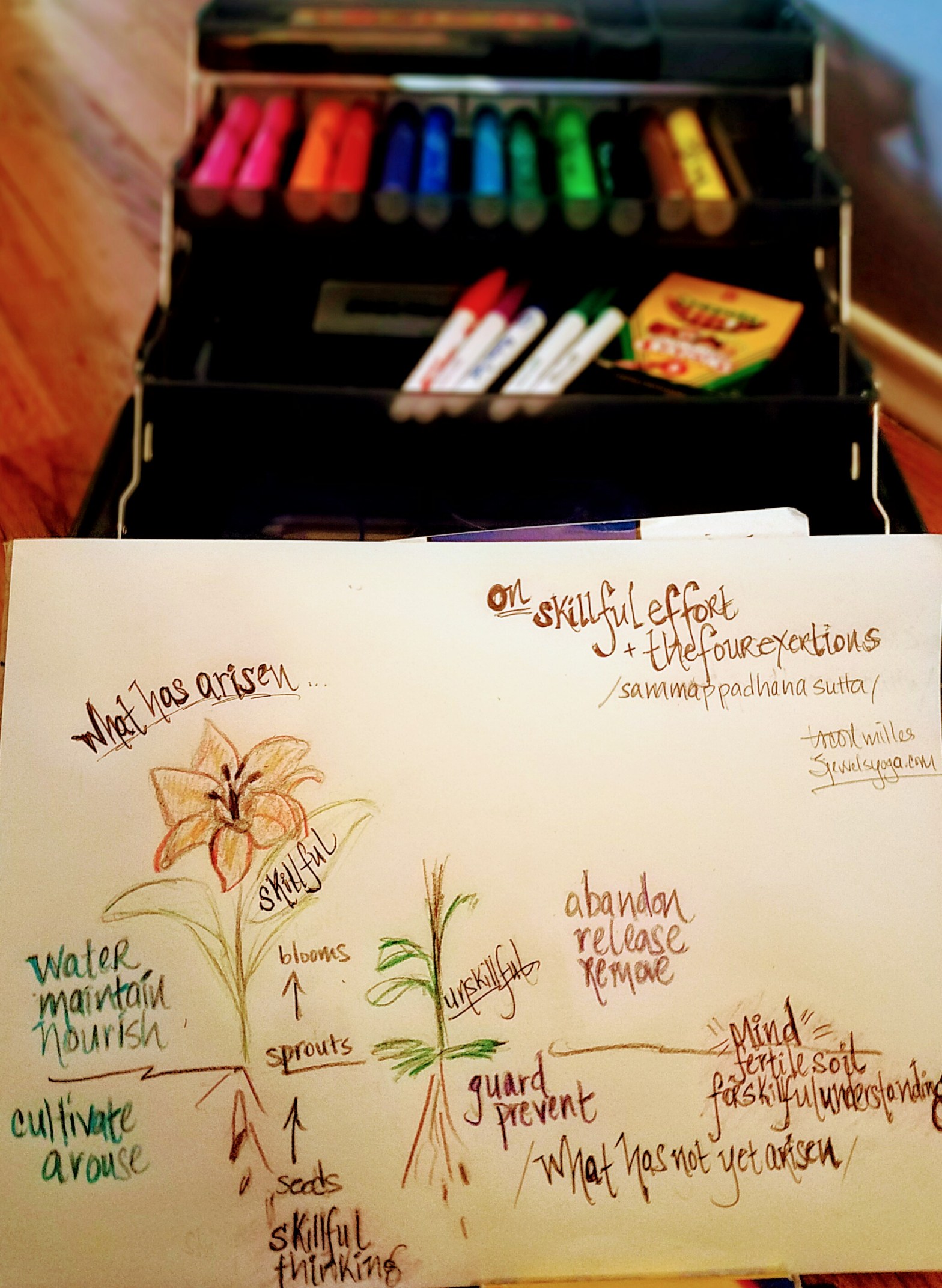
The featured image is my sketch of the Four Exertions, which inform our efforts to: cultivate skillfulness by watering and maintaining what has arisen while arousing or awakening skillfulness that has not yet arisen; and to transform unskillfulness by releasing and not dwelling in unskillfulness that has arisen while guarding against and not fueling that which has not arisen.

other liberating actions of  the eightfold path

on skillful understanding + skillful thinking
on skillful speech, skillful action + skillful livelihood

when + where we enter | abiding in the practice

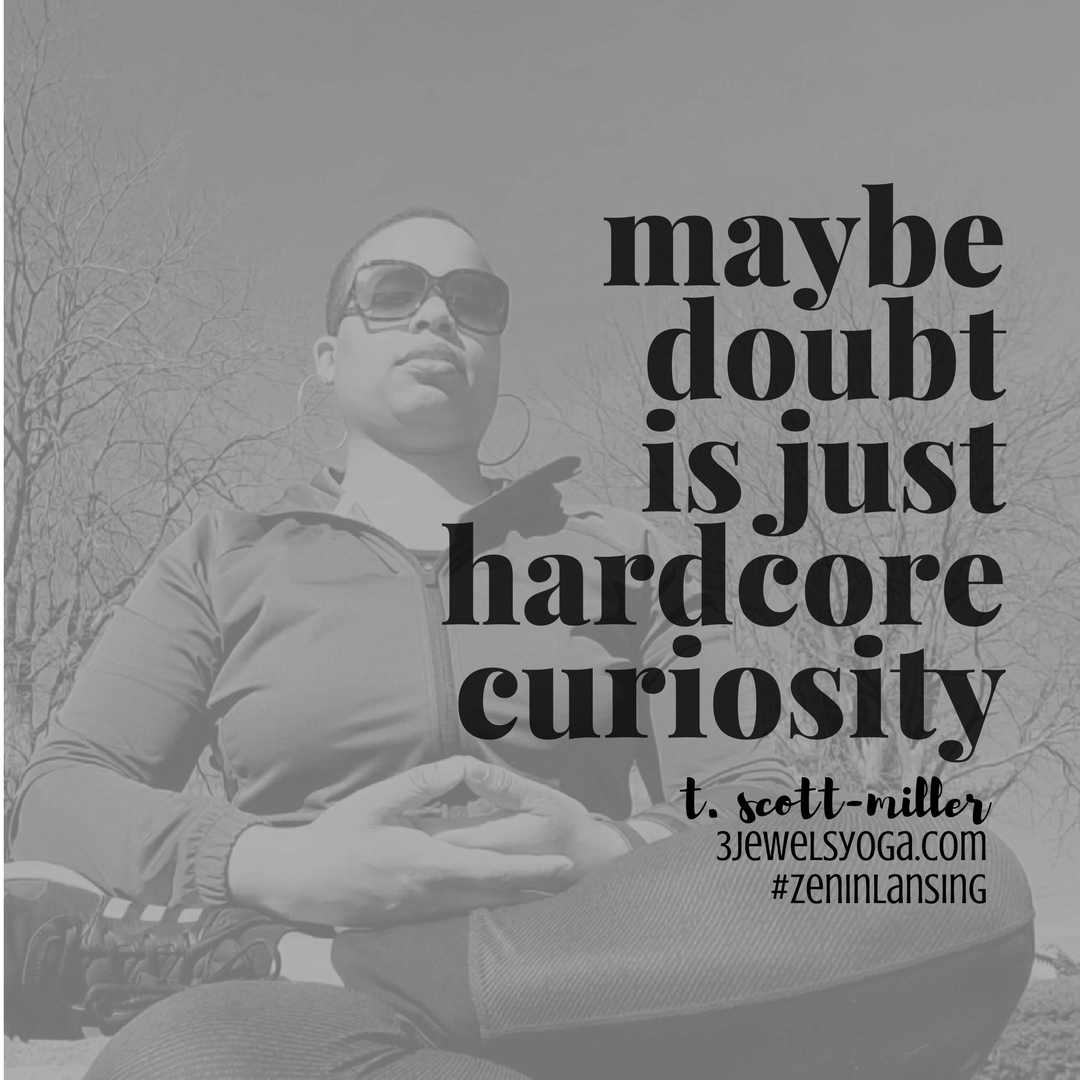
We closed yesterday’s daylong practice of discernment and self-inquiry by reflecting on how we aspire to show up and carry what we have learned about cultivating radical bodhicittawhat I call the heart and mind of justice, liberation, and healing — into our ever-widening circles of compassionate social action.

After everyone departed, I returned to the room to collect my belongings and stood for a few breaths to rest and revel in the full energy we had collectively generated. In that sacred pause, I looked down at my stuff scattered around me — realizing that I was embodying the wisdom that framed the final segment of our discernment. Have your heart be where your feet are. I had spent the day exactly where my heart had called me to be.

When we value and intentionally cultivate the sacred pause, we can amplify our capacity to listen deeply to the call of our hearts and see clearly the direction our feet will go.

when(ever) + where(ever) we enter, may our hearts be where our feet are. 

wp-image-913269051jpg.jpg

…we are in fact not where are feet are. We are not here. Or at least we are not all here.
The “where” that our heart is not so much a place but
a different time: past, and simultaneously, the future.
We are everywhere but in the now.
~Omid Safi
read Safi’s full column: Have Your Heart Be Where Your Feet Are

#marchmindfulness2017 | on women cultivating community rooted in liberation

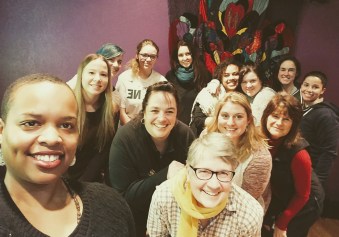
3jy.sangha5feb2017.jpg

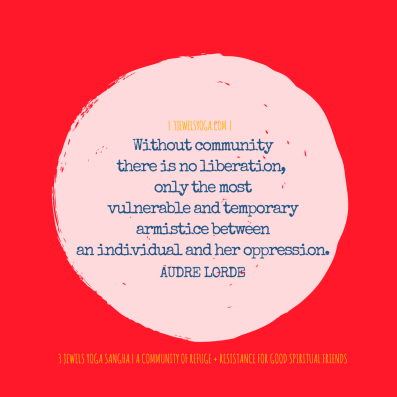
“As women, we have been taught to either ignore our differences, or to view them as causes for separation and suspicion rather than as forces for change. Without community there is no liberation, only the most vulnerable and temporary armistice between and individual and her oppression. But community must not mean a shedding of our differences, nor the pathetic pretense that these differences do not exist. Those of us who stand outside the circle of this society’s definition of acceptable women; those of us who have been forged in the crucibles of difference — those of us who are poor, who are lesbians, who are Black, who are older — know that survival is not an academic skill. It is learning how to take our differences and make them strengths.3jewels-lordequote2

For the master’s tools will never dismantle the master’s house. They may allow us temporarily to beat him at his own game, but they will never enable us to bring about genuine change. And this fact is only threatening to those women who still define the master’s house as their only source of support.”  Audre Lorde


Read the entire essay:
The Master’s Tool Will Never Dismantle The Master’s House

march mindfulness 2017 | on justice, liberation + healing

3jewels-marchmindfulness2017

Each year I launch this campaign to uplift wisdom, values, teachings and affirmations that nourish our capacity for compassion, skillful understanding, and authentic connection.

Aligned with Sangha’s monthly contemplation and culminating with my upcoming workshop, When + Where We Enter, we’ll shine the light on and look deeply into practices of Justice, Liberation + Healing.

March Practice Schedule

on refuge + resistance | surviving to sustain skillful action

Revolution is not a one-time event.
It is becoming always vigilant for the smallest opportunity
to make a genuine change in established, outgrown responses;
for instance, it is learning to address each other’s difference with respect.
We share a common interest, survival, and it cannot be pursued in isolation
from others simply because their differences make us uncomfortable.

We know what it is to be lied to.
The 60s should [have taught] us how important it is not to lie to ourselves.
Not to believe that revolution is a one-time event,
or something that happens around us
rather than inside of us.
Not to believe that freedom can belong to any one group of us
without others also being free.
How important it is not to allow even our leaders to define us to ourselves,
or to define our sources of power to us…

Each one of us must look clearly and closely
at the genuine particulars (conditions) of his or her life
and decide where action and energy is needed
and where it can be effective.
~ Audre Lorde

3jewels.womensmarchdeeprefuge.jpg
Post-Women’s March Deep Refuge + Restoration Circle
yesterday, we marched.
today we rest, take deep refuge and restore ourselves in the full embrace of sangha
to rise up and take action again.
~t. scott-miller


sangha study schedule

Join us in February, as we complete our three-month journey along the Noble Eightfold Path with a study the faculties of Skillful Effort, Skillful Mindfulness, and Skillful Concentration. The following month, we’ll deepen our contemplation of Justice, Liberation, and Healing — the focus of our annual call-to-action, March Mindfulness — and close out our winter series with a special full-day workshop on the topic on 3/19. View: Upcoming Practice Dates.

on refuge + resistance | becoming a sanctuary

On Monday, I was overcome by emotion at the devastating stories of Muslim immigrants being cut off from their rightful homes — families, livelihoods, and beloved communities — here in the U.S. and of refugees, who had been promised entry on asylum, being sent back to waiting gallows. I became teary-eyed and shaky as I thought of my multinational clutch of friends, and of my family members, living and deceased, and ancestors, who have migrated within or emigrated from other parts of the world to this nation. The What-Ifs spiraled through my mind: What if friends I know are deported or denied re-entry? What if the ban extends to any immigrant who does not have full citizenship and my dad (who is not Muslim nor from a Muslim country) too becomes a victim of this gross xenophobia?

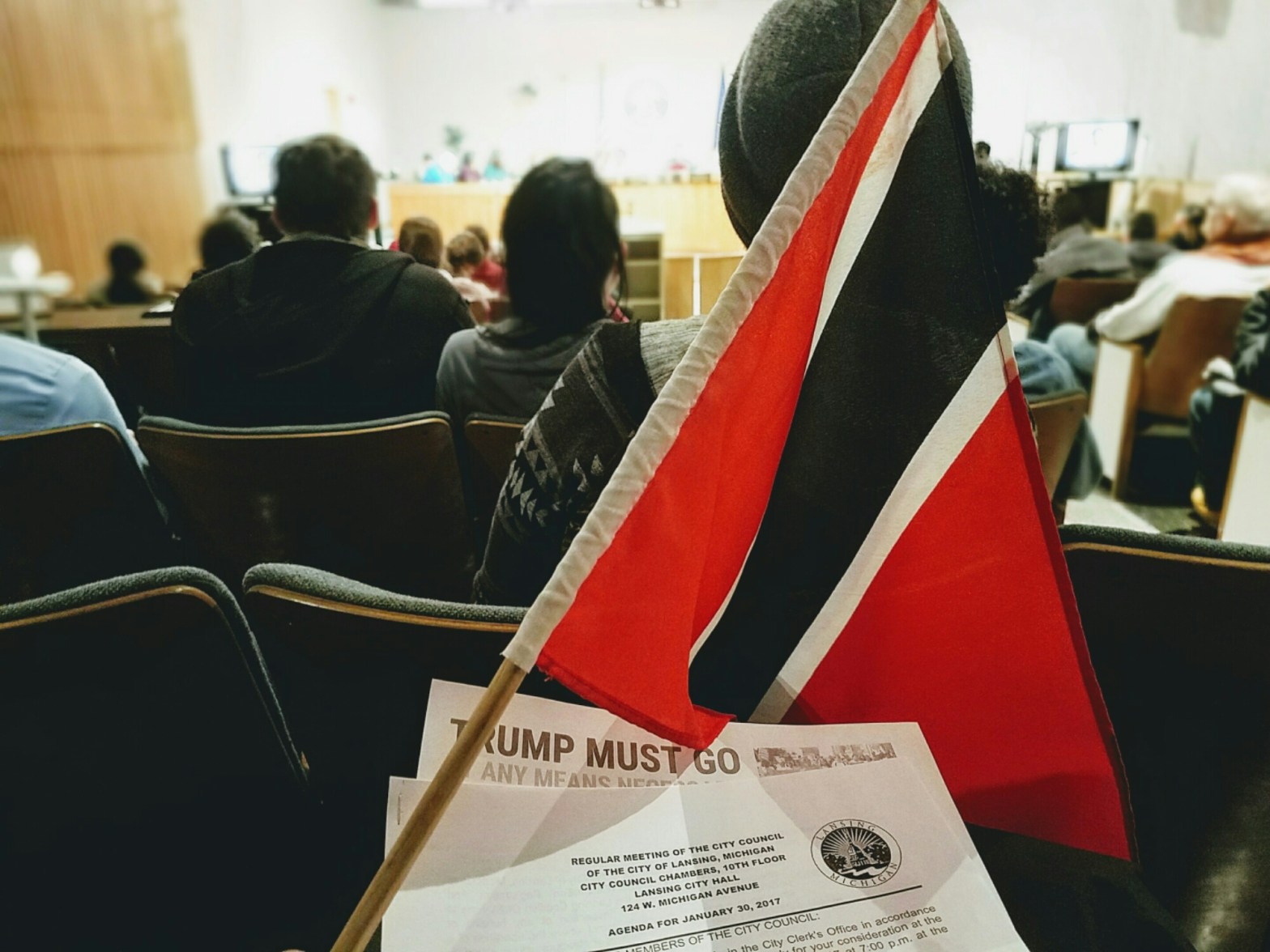
Angry and proud, I carried the flag of my father’s island into a city council meeting to show my support for a resolution to make our community an official sanctuary for all immigrants.

My family has crossed many borders and belonged to many nations.

My father is from Trinidad + Tobago and came to the U.S. with his steel pan band in the 70s. His father and his maternal grandmother island-hopped from Barbados to Trinidad. I’m told our people are scattered throughout the Caribbean. I have cousins from both islands who are now legal residents in the U.S.

My maternal grandmother is a 1st-generation U.S. citizen whose Canadian parents immigrated to Pontiac, MI. Her maternal grandmother was a Jew from Stuttgart, Germany who, at 17 years old, immigrated to NYC in 1880, then crossed the northern borders into Canada. Her maternal grandfather was a slave born on a plantation in Virginia. He enlisted in the Union Army, fought in the Civil War, and moved to Buffalo, NY following his honorable discharge before crossing into Canada.

My mother welcomed people of all cultures into our home and, when I was a child, even hosted two Belizean women as guests for a short stay. In her almost 40-year career in social work, she wholeheartedly served refugee and other immigrant communities. She bonded with them, kept in touch after their services ended — they invited her to dinners, baby showers, and birthday parties. She became a trusted friend who their children called Auntie or Gramma.

My extended family and friends come from many nations or are descendants of immigrants or are married/committed to and have built families with immigrants or descendants of immigrants.

My neighbors are from Vietnam and Cuba — I’ve watched their children grow up alongside my son.

There is no part of my life or my heart that has been untouched by an immigrant. 

My hope is that the #LoveLansing City Council acts in alignment with our mayor’s pledge to protect our refugee and immigrant community and resolve to declare my hometown a sanctuary city.

So ask me again why I am outraged? Why I’m sad? Why I feel threatened? I’ll gladly repeat it over and over and over: It’s literally in my DNA to give a damn!
__________

Read our Mayor Virg Bernero’s pledge via Fox 47 News.

on refuge + resistance | today we march

Reclaim. Resist. Rise Up! For Justice. For Equity. For A Future To Be Possible. #MarchOnWashington #MarchOnLansing #SisterMarch

#WhyIMarch

For those who came before me — for their sacrifices, suffering, and will to survive.

It’s in my DNA to give a damn!

embody privilege and risk as an educated cis-hetero black woman who is the daughter of an immigrant, a mother to a multi-ethnic child, a wife in an interfaith, inter-racial marriage to a survivor of gun violence who lives with a disability.

I cannot, do not, will not co-sign craziness.

For my beloveds and for all the beloveds in generations to come to inherit an Earth that has been restored to wholeness and where integrity, compassion, wisdom, creativity, and deep listening are society’s leading values .

To call out unmitigated and unexamined whiteness, which in its denial of privilege and  refusal to take accountability for oppressions and inequities, creates a toxicity that corrodes what unites us.

Because corruption and complacency are killing us.

To build our capacity as a spiritually resilient community that cultivates and protects justice, freedom, and equity through compassionate, creative, innovative and skillful understanding and actions.

To be a beacon of light as a community of refuge and resistance against hate, violence, inequity and oppression.

For Justice, Liberation + Healing!

Today, we march. Tomorrow, we rest, take refuge and restore ourselves to rise up and to take action again.

on refuge + resistance | the ghostlight project

A brave space

Not a left space

Not a right space

Not hard space

Not a soft space

A space willing to endure the harsh light of scrutiny

A space prepared to turn that light on life itself and explore the cracks and blemishes, yet still celebrate the magic and mystery of our existence

In spite of all the protestations in the world to the contrary, this space bravely seeks to find the commonality and love at the core of all people.

~ jeff croff, Artistic Director of Ixion Theatre Ensemble

Twenty-four hours ago, I was knocked down by food poisoning and feeling that it was truly a befitting affliction — a purging out of toxins (body, heart, mind + spirit) — as we enter the Twilight Zone on tomorrow.

Strength regained, I spent Thursday evening doing what nourishes me most: being in community.

As a board member of Ixion Theatre Ensemble, I stood alongside our collective at the Ghostlight Project event in solidarity with eight other #LoveLansing theatres, including host/organizer Peppermint Creek Theatre, special guest Tony Award-winning playwright (and Lansing native!Lisa Kron, and many arts-loving community members in a nationwide initiative to pledge our commitment to inclusion, justice, equity, and compassion for all.

There, my dear friend and frequent collaborator Ann Lapo and her partner, theatre veteran Jeff Boerger, closed the event by leading us in a song resonate with the purpose of the gathering — a call to action to be a light and sanctuary as people of love. Afterward, when we connected, Ann reminded me that we are, in fact, the majority!

I know this to be true in theory but confess that right now it’s so very hard to see it in practice when the “few” are doing their damnedest to strip the “many” of our humanity.

I cannot wait to march on Saturday to be in the full presence of others who are committed to protecting, demanding and cultivating justice, equity, safety, liberation and healing. To sing, shout and shine through with darkness.

Read the full transcript of jeff croff’s vision and pledge to brave spaces that he shared at the event.