#StraightOutta…The Archives

This slideshow requires JavaScript.

I have vivid memories of the kids in my South Lansing neighborhood emulating our favorite West Coast rappers — we even dubbed ourselves “the Cooper Street Posse” in homage. Years later, at high school, their music was a contagion. Whether in the girls’ dorms or the academic hall of the prestigious suburban-Detroit boarding school I attended, we would readily burst into full chant Glee-meets-NWA style upon hearing someone muttering lyrics of whichever track had been ear-wormed itself into consciousness. (It must be noted that the “jock table” was the choice hangout spot for the black students and was situated directly across from the administrative office…call it a small measure of rebellion).

My musical leanings have changed, but those beats are encoded in my dna from every choreographed move (and misstep) of our 7th-grade dance routine for Something 2 Dance 2. So I’m repping my #LoveLansing roots with this Zen twist!

Hear Here [for deep listening]: beyond our greatest hopes | holly maakima

My friend Holly Maakima surprised me back in May with a simple note saying, that as she prepared to give a spiritual talk later that day, she would be holding me up as an example of someone who gives her hope.  Heart flooding. Tears welling. I breathed her blessing in deeply.

It was a stunning, divinely-timed affirmation that arrived when I most needed to be reminded that my endeavors — personally and professionally — to be a good spiritual friend were purposeful and impactful. My moment of doubt was silenced; questions were answered. Clarity and hopefulness blossomed, and I was reinvigorated to keep nourishing my aspirations.

I am so thankful to have companions who plant and water seeds of love, inspiration, kindness, hope and trust in my life.  It is the sustenance of healthy, trusting relationships. We feed and empower one another to be our authentic selves, giving guidance and support along the way.

A spiritual teacher and writer, Holly recently shared the recording of that talk at Fellowship for Today, so I’m spreading this loving message of hope near, far and wide! Hear Here: Beyond Our Greatest Hopes (http://www.fellowshipfortoday.org/files/sound/holly-makimaa-beyond-our-greatest-hopes-051715.mp3)

HEAR HERE [for deep listening]: Opening The Question of Race to the Question of Belonging | On Being with Krista Tippett

And I think being human is about being in the right kind of relationships. I think being human is a process. It’s not something that we just are born with. We actually learn to celebrate our connection, learn to celebrate our love. And the thing about it — if you suffer, it does not imply love. But if you love, it does imply suffering. So part of the thing that I think what being human means to love and to suffer, to suffer with, though, compassion, not to suffer against. So to have a space big enough to suffer with. And if we can hold that space big enough, we also have joy and fun even as we suffer. And suffering will no longer divide us. And to me, that’s sort of the human journey.
~ john a. powell

I was invited to facilitate a dharma discussion for my root sangha to address the wellspring of emotions and concerns members have expressed following the tragedy in Charleston last week. Drawing on the Four Foundations of Mindfulness, I entitled the talk “Good Spiritual Friends: Taking Care of Ourselves & One Another in the Face of Racism, Bias, & Injustice” and asked that we actively investigate our own perceptions, intentions and behaviors as we reflect on how to apply and cultivate the dharma in response to such devastation. We expressed our confusion, anger, shame, fear, helplessness, outrage. We cried. We breathed. We sat with our discomfort. 

I asked that we continue to find refuge in practices that help to nourish and ground us as well as those that illuminate unskilfulness, awaken clear comprehension, and inspire compassionate actions.

That sweet space of refuge is fleeting: Our hearts burst open with the victory of the Marriage Equality Act last Friday. Then they are crushed once more with every church that goes up in flames at the hands of racist terrorists. 

For sanity and nourishment, I am mindful about what I consume–attempting to combat this madness by sharing this dose of sustenance (clear, compassionate understanding) for the mind and soul.

Hear Here: john a powell ~ Opening the Question of Race to the Question of Belonging

KnowTheirNames
artist: sarah green

embodied practice: tonglen

I have to be real: even after a decade of practice, conjuring compassion or loving-kindness is not always my default response in the face of arising difficulty or suffering.

Anger, irritation, disappointment, fear — primal and deeply-programmed — seep to the surface when peace, stability, safety and simplicity are threatened. They are quelled with time and, most important, my faith, effort, concentration, mindfulness, and discernment (five spiritual faculties). To penetrate and dissolve those strong feelings first takes faith, or conviction, in practices that offer me a deep sense of refuge. I literally need to move through it by going for a walk or run. The effort of exertion generates a physical and energetic heat that helps me burn off tension and generate enough concentration and mindfulness to spark clear-seeing wisdom. As the body cools off, so too does the heart and mind. Emotions, though tempered by mindfulness, are not so easily released. I still have two hands to hold anger or frustration alongside this newly-stoked calm clarity.

The practice of tonglen speaks to me deeply because it allows space for the complexity of our human-ness, where both the suffering and the relief co-exist. It feels more accessible and authentic to me than the Metta Meditation, which seems to require superhuman leaps and bounds toward lovingkindness. Beautiful as it is, I find it reminiscent of the fake-it-til-you-make-it philosophy. It’s a worthy aspiration. Just not one that I can sustain in practice. Tonglen seems to honor the teeny-tiny baby steps and stumbles and the slow, tentative climb out of the pit back onto solid ground. Sometimes that’s all I can muster. I trust it to be enough.


More from Pema Chodron: The Practice of Tonglen [Shambala, 2007]


earth day celebration: touching the earth

The practice of Touching the Earth is to return to the Earth, to our roots, to our ancestors, and to recognize that we are not alone but connected to a whole stream of spiritual and blood ancestors. We are their continuation and with them, will continue into the future generations. We touch the earth to let go of the idea that we are separate and to remind us that we are the Earth and part of Life.

~ excerpt from the Plum Village blog.
Read more about practice of Touching The Earth.

from cushion to community: navigating faith livestream

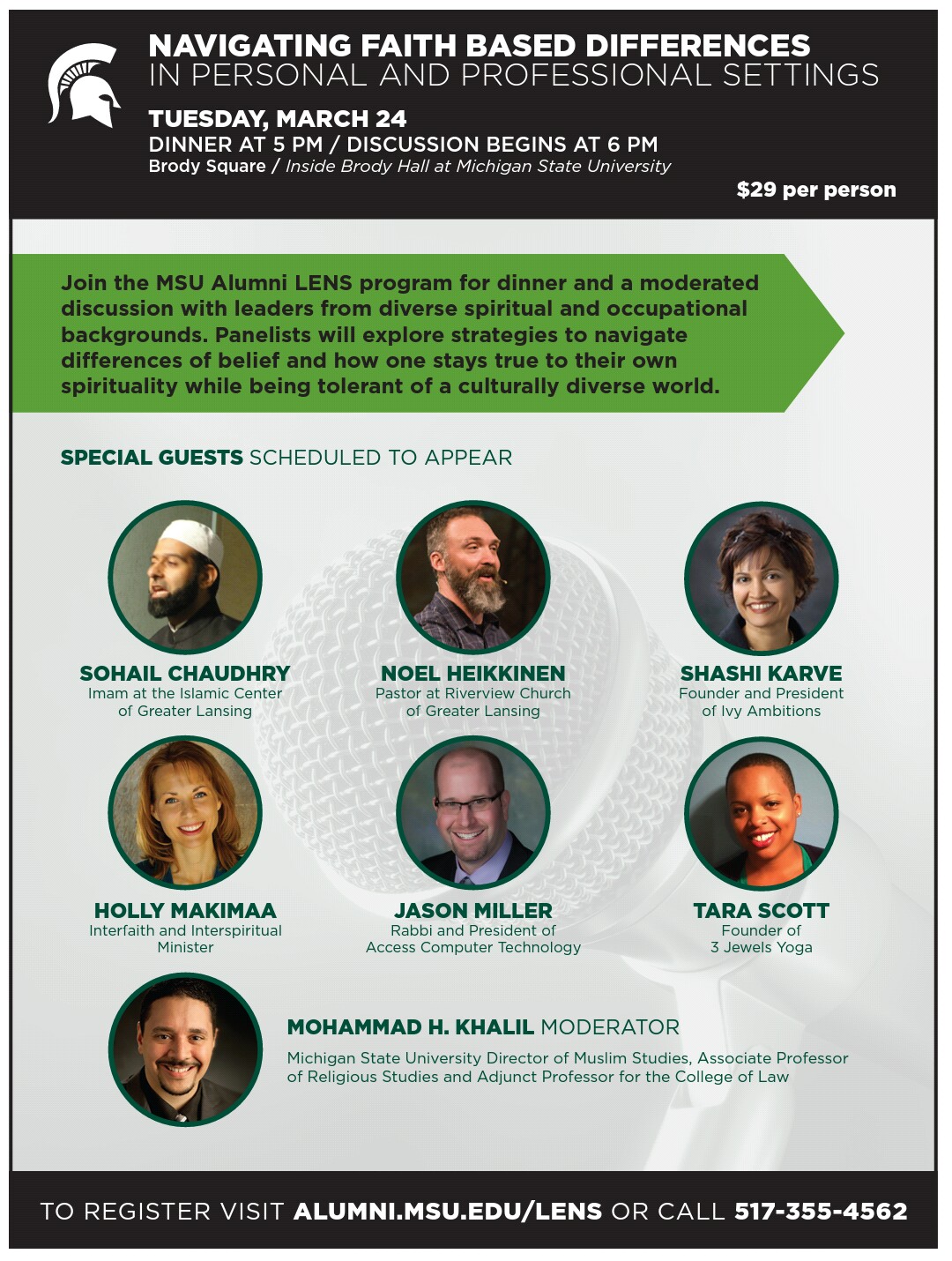
So a Rabbi, a Buddhist, an Inter-Spirtual teacher, a Hindu, a Christian + an Imam sit down at at table…

Yes, it sounds like a setup to a humorless joke but it was a joy to participate in this interfaith conversation where we planted seeds for building bridges and fostering compassionate understanding among people of various philosophies and faiths.

wpid-screenshot_2015-03-09-15-59-302.jpg.jpeg

Livestream for MSU Alumni LENS panel discussion: Navigating Faith-based Differences

Or click to view here: http://livestream.com/msualumni/FAITH

On “The Muddied Meaning of Mindfulness” | NYT.com

“Maybe the word “mindfulness” is like the Prius emblem, a badge of enlightened and self-satisfied consumerism, and of success and achievement…No one word, however shiny, however intriguingly Eastern, however bolstered by science, can ever fix the human condition. And that’s what commercial mindfulness may have lost from the most rigorous Buddhist tenets it replaced: the implication that suffering cannot be escaped but must be faced. Of that shift in meaning — in the Westernization of sati — we should be especially mindful.” ~VIRGINIA HEFFERNAN

Here I am this morning, preparing to share the practices with a group at our local law school, when this New York Times article pops up in my newsfeed!

When introducing mindfulness to the uninitiated, I am always clear about distinguishing its Buddhist origins–as an energy, a skill, a virtue among many others (like compassion, empathetic joy, trust, equanimity and loving-kindness) that we cultivate within our larger spiritual discipline–from its application as a secular/clinical “technique.”

For practitioners, it is not a trendy tool for self-improvement and is more than just a style of meditation. It is a vital foundation for living. How we think, speak, behave, and engage the world is filtered through the gates of mindfulness. It is one of the 5 Spiritual Faculties (or Powers) that we nourish alongside of trust, diligent effort, concentration and wisdom.

One does not have to become a Buddhist to authentically cultivate mindfulness. Yet many are concerned that as it becomes “sanitized” and popularized, it can also be mis-used and cause harm when not framed within the context of offering a deeper understanding of the teachings (i.e. The Foundations of Mindfulness/Satipatthana Sutta) and community-centered practice of Buddhism.

May all who integrate mindfulness benefit from it and may the fruits of their efforts benefit others.

Read the full article here:
The Muddied Meaning of Mindfulness

The Girl Who Got Up | TashmicaTorok.com

A truth about meditation: it can be uncomfortable or even excruciating, as my friend Tashmica so eloquently shares below.

First we meet the process of physically conditioning our bodies to find and sustain a steady posture (practice note: for me, “conditioning” means understanding how to take care of the tensions in the body not torturing ourselves to endure a rigid alignment that can create more distress). Holding the body through sitting meditation, in particular, takes time…just as training the body to walk a half marathon takes time, diligence and patience.

What we may be surprised to learn is that meditation is not “passive.” Rather, I’ve found it more accurate to frame meditation as I would yoga asana — in which we discover that the opposite of being active is not being passive; it is the more complex and dynamic energy of being receptive.

Sitting within the quiet space of receptivity, we open up to the possibility of encountering the hidden/neglected/protected parts of ourselves. With that, difficulties and discomforts may arise well before any insights or understanding that we may be longing for.

How, then, do we take care of ourselves through those moments when we discover that this practice, which is so often extolled for delivering peace, actually puts us face-to-face with the stunning reality that cultivating peace is a process…a training, not unlike a marathon. Tending to our hearts and minds requires our patience, diligence, and self-compassion.

I love that Tashmica is choosing not to give up but to keep getting up!

spirit. human. black woman.

V shared a personal revelation —

spirit. human. black woman.2

she had come into an awareness of
her magnitude and design as a

spirit/soul
human/body
black + woman

in that precise order.

how necessary to acknowledge
being so much bigger than this body
and to cherish the fleeting human life span

of a woman
of hue and shape
of undeniable origins 

giving refuge and expression to
a boundless and indestructible force.

to celebrate her blackness —
a unique dna of history, culture, biology, and expression

is to nourish her body —
mindful of its resilience and fragility
its cycle of consuming, creating, destroying, releasing, renewing

is to honor the spirit —
a source of radiance, wisdom, compassion
empowering a life with purpose

[january 2014]

Continue reading “spirit. human. black woman.”

toward wholeness: nurturing interdependence {in honor of mlk jr}

We are caught in an inescapable network of mutuality,

Tied in a single thread of destiny.

Whatever affects one directly, affects all indirectly.

brown gurls healing circle [18 jan 2014]

Never again can we afford to live with the narrow, provincial “outside agitator” idea.

Anyone who lives inside the United States can never be considered an outsider anywhere within its bounds.

~Dr. Martin Luther King Jr
Letter from a Birmingham Jail
[April 16, 1963]