embodied practice: Zenju’s Meditation on Surviving Acts of Hatred

In the wake of the Charleston massacre, I led a dharma discussion for my sangha, Lansing Area Mindfulness Community, on being ‪‎good spiritual friends‬ and reflected on ways we can take care of ourselves and one another in the face of racism, bias, and injustice. I shared passages from Zenju Earthlyn Manuel’s book, The Way of Tenderness, which I had been studying since its release last winter, and invited all to deeply penetrate the body as nature:

“Seeing body as nature is to directly see form
as nature, as of the earth.

It is to see the pure form of life without the distortions…
Rage springs up when certain embodied forms of life–blackness, queerness, and so on
–are not recognized and honored as part of nature.”

Once again, Zenju offers healing wisdom through an embodied practice of breathing. I hope you will share this far and wide with others who are seeking to reconcile with and find refuge within the body…as nature, as home:

“May the great light of this Earth surround me,
May I be released from past harm and imposed hatred.
May I come to recognize my existence in the true nature of life.
May I come back to this breath, to this body,
as the sacred place in which I remain awake

and connected to the fragrance and taste of liberation.”

May our healing continue…

Read Zenju’s full post here:  I Can Breathe: A Meditation on Surviving Acts of Hatred

embodied wisdom: commentary on “Choosing the Right Running Shoes – NYTimes.com”

“Perhaps most unexpected, running shoes designed to somehow “fix” someone’s running form turned out often to be ineffective and even counter-productive.”

~ Gretchen Reynolds | NYTimes.com

Shin splints, patellofemoral syndrome (aka runner’s knee), a broken toe, stress fracture of the foot, a sprained ankle, a strained piriformis, sciatica, chronic hip and sacroiliac pain…and this list only covers my lower half!

Mine is a body that has sustained and, thankfully, recovered from numerous injuries.

With the exception of fracturing my foot after jumping cross-legged off a cement post when I was 8 (and apparently crazy), I can trace all of my physical dysfunctions and subsequent recurring pain back to the three years I spent on my high school track team hurling a shotput and discus across fields. I suffered the consequences of overuse and repetitive stress from being under-coached and under-conditioned (the inequities in girls’ training and conditioning in sports is a topic for another post) well into my 30s.

No single pair of shoes or orthotics — whether those prescribed and specially-designed for my feet by two different podiatrists as well as the “over-the-counter” from a footwear store — successfully resolved my bouts with pain. I’d get temporary relief then the pain would resurface and continue migrate between my traumatized body parts (shoulder, hip, sacrum, leg) with varying levels of intensity and duration. Finally, two years after pregnancy, childbirth, and the ensuing exertions of parenting had magnified these strains, I could no longer live with short-term fixes that only addressed the afflicted area of the moment.

I needed and ultimately benefited from a holistic approach to rehabbing my body. I worked on realigning my pelvis; strengthening and stabilizing my deep core muscles, hips, shoulders, and feet; mobilizing strained tissues with massage; and maintaining/returning to a neutral posture throughout my day.

I’m not saying that shoes aren’t a factor at all. But I don’t think it’s a wise practice to focus so much on what we put on our feet while neglecting to pay attention to how we take care of our feet and the rest of our body.

Full disclosure. I’m a skeptical/mindful consumer and am fully aware that shoe companies have a vested interest in our buying new shoes every few months. So I challenged my own rehab doctors with questions about the validity of the commonly circulated advice to swap our running shoes out after 300 – 500 miles. The response was non-committal — it may be more of an individual choice based on one’s biomechanics and how quickly they wear down shoes.

My bottom line.
Be the expert of your own body! Become fluent in the messages it relays through sensations of pain, fatigue and imbalance as well as those of strength, freedom of movement, stamina, and well-being. Keep testing out what’s true for you!

Read more about the research on biomechanics and running shoes via the NYTimes.com: Choosing The Right Running Shoes.

moving in the spirit of self-love

Health is not an optimal way to make physical activity relevant and compelling enough for most people to prioritize in their hectic lives…We should count any and every opportunity to move that exists in the space of our lives as valid movement worth doing.

~ Dr. Michelle Segar

I taught group fitness classes in an athletic center for 7 years and more or less squandered the “perk” of having a free membership. Much of it was due to the logistics of time and distance: managing a roster of classes taught at multiple locations, coordinating childcare, and being a single-car family with a staggered lineup of activities. The rest: my hard-to-shake sentiment that gyms suck!

But when the frenzy of a hectic period collided with the pressures of meeting everyone else’s needs before my own, I knew that soothing myself with a 20-minute meditation practice wouldn’t be effective. So I decided to burn off the stress with some tension-busting cardio. However, instead of feeling relaxed and restored, I found myself getting increasingly disgruntled.

Creeping in was the crazy-making noise of negative self-talk! I replayed frustrations and common scenarios that had (or would) hijacked my self-care routine; imagined the endless hours and superhero dose of willpower it would take to reach my pre-pregnancy weight; and lamented how little I had appreciated my body in the past. Then a clear voice cut through the chatter. Enough! This is not healthy. I jumped off the elliptical and headed straight to the sanctuary of my favorite park where sunshine, open air, and quiet woods always nourished my sense of sanity and well-being.

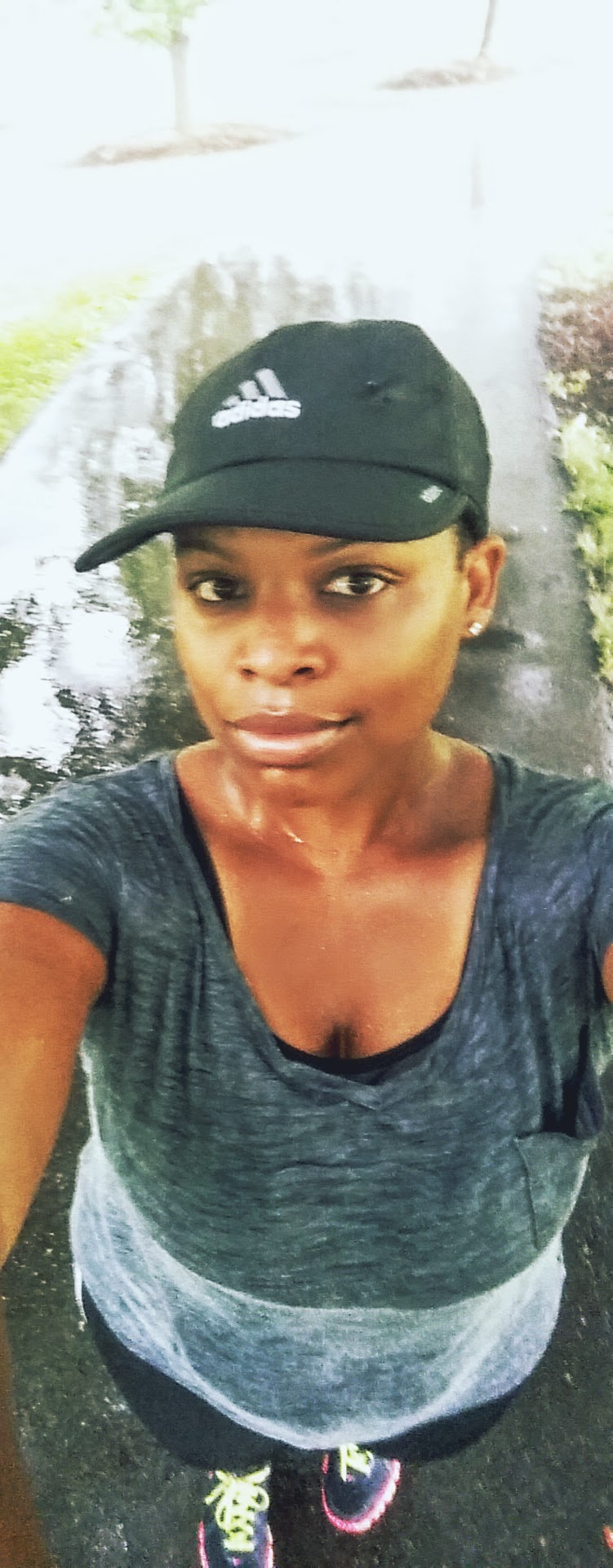
trailblazing in the rain

As a practitioner and advocate of the principles of mindfulness, I recognized in that moment that exercising in a state of duress and dissatisfaction would only feed my discontent. I, like so many others, transformed what is intended to be an endeavor to improve health into an act of self-violence. Yes, even the seemingly noble goal of self-improvement can be fraught with violence. The struggling and striving to be better — to be or have enticingly “more than” in this area or “less than” in another — can lead us to unsavory places. Comparing, criticizing, loathing, harming. For me, the gym can be a hostile space where self-contempt breeds like staph bacteria on a locker room floor. Far too many people are hating themselves into exercising.

I vowed from then on to only move in the spirit of self-love: to saturate every cell and fiber with affirming thoughts and feelings; to strengthen and energize body, heart and mind with meaningful activities (like walking in nature) that made my muscles sing. I refused to participate in or propagate the “self-improvement hustle” (inescapable in the fitness industry and, well, our culture in general) and recommitted myself to cultivating self-understanding. A core tenet of my spiritual traditional, it is through diligently seeking to know ourselves that we can make skillful and compassionate choices. When I have a case of the blahs, I listen deeply to take the appropriate course of action: sometimes it means I rest and turn off my brain, at other times it signals that I must hit the trail for a run to unravel tensions and uplift my spirit.

Reframing exercise in this way enabled me to integrate it more consistently into each busy day. It no longer felt like an agonizing chore that generated guilt if I had to keep putting off (like the clean basket of laundry that takes days to fold, hang and stow). Other key factors in making exercise more sustainable for me:

1) Letting my partner know just how essential it was to my well-being (teaching classes did not count) and requesting extra support from him around scheduling adequate time for self-care. Bonus: It proved to be beneficial for both our endeavors to correct physical imbalances and rehab from long-standing injuries.

2) Turning exercise into a social event. Aside from being an ambassador of a running group, where organizing and leading weekly runs kept me accountable to my commitment to train several days a week, I began setting up walking dates with my girlfriends. Bonus: We share news, laugh, contemplate, problem-solve, air grievances, blow off steam and…save money we’d spend on food and beer!

The gym is still not my first choice — not when the park is closer and free — but I’m now fully inoculated against the toxicity I once experienced there. Running on the treadmill or lifting weights, I am fortifying myself with a deep care and respect for the vitality this body of mine possesses.

Read more about Dr. Segar’s research on reframing exercise:  NYT.com | Rethinking Exercise as a Source of Immediate Rewards
[updated on 30 March 2016]

HEAR HERE [for deep listening]: Opening The Question of Race to the Question of Belonging | On Being with Krista Tippett

And I think being human is about being in the right kind of relationships. I think being human is a process. It’s not something that we just are born with. We actually learn to celebrate our connection, learn to celebrate our love. And the thing about it — if you suffer, it does not imply love. But if you love, it does imply suffering. So part of the thing that I think what being human means to love and to suffer, to suffer with, though, compassion, not to suffer against. So to have a space big enough to suffer with. And if we can hold that space big enough, we also have joy and fun even as we suffer. And suffering will no longer divide us. And to me, that’s sort of the human journey.
~ john a. powell

I was invited to facilitate a dharma discussion for my root sangha to address the wellspring of emotions and concerns members have expressed following the tragedy in Charleston last week. Drawing on the Four Foundations of Mindfulness, I entitled the talk “Good Spiritual Friends: Taking Care of Ourselves & One Another in the Face of Racism, Bias, & Injustice” and asked that we actively investigate our own perceptions, intentions and behaviors as we reflect on how to apply and cultivate the dharma in response to such devastation. We expressed our confusion, anger, shame, fear, helplessness, outrage. We cried. We breathed. We sat with our discomfort. 

I asked that we continue to find refuge in practices that help to nourish and ground us as well as those that illuminate unskilfulness, awaken clear comprehension, and inspire compassionate actions.

That sweet space of refuge is fleeting: Our hearts burst open with the victory of the Marriage Equality Act last Friday. Then they are crushed once more with every church that goes up in flames at the hands of racist terrorists. 

For sanity and nourishment, I am mindful about what I consume–attempting to combat this madness by sharing this dose of sustenance (clear, compassionate understanding) for the mind and soul.

Hear Here: john a powell ~ Opening the Question of Race to the Question of Belonging

KnowTheirNames
artist: sarah green

embodied practice: tonglen

I have to be real: even after a decade of practice, conjuring compassion or loving-kindness is not always my default response in the face of arising difficulty or suffering.

Anger, irritation, disappointment, fear — primal and deeply-programmed — seep to the surface when peace, stability, safety and simplicity are threatened. They are quelled with time and, most important, my faith, effort, concentration, mindfulness, and discernment (five spiritual faculties). To penetrate and dissolve those strong feelings first takes faith, or conviction, in practices that offer me a deep sense of refuge. I literally need to move through it by going for a walk or run. The effort of exertion generates a physical and energetic heat that helps me burn off tension and generate enough concentration and mindfulness to spark clear-seeing wisdom. As the body cools off, so too does the heart and mind. Emotions, though tempered by mindfulness, are not so easily released. I still have two hands to hold anger or frustration alongside this newly-stoked calm clarity.

The practice of tonglen speaks to me deeply because it allows space for the complexity of our human-ness, where both the suffering and the relief co-exist. It feels more accessible and authentic to me than the Metta Meditation, which seems to require superhuman leaps and bounds toward lovingkindness. Beautiful as it is, I find it reminiscent of the fake-it-til-you-make-it philosophy. It’s a worthy aspiration. Just not one that I can sustain in practice. Tonglen seems to honor the teeny-tiny baby steps and stumbles and the slow, tentative climb out of the pit back onto solid ground. Sometimes that’s all I can muster. I trust it to be enough.


More from Pema Chodron: The Practice of Tonglen [Shambala, 2007]


from cushion to community: navigating faith livestream

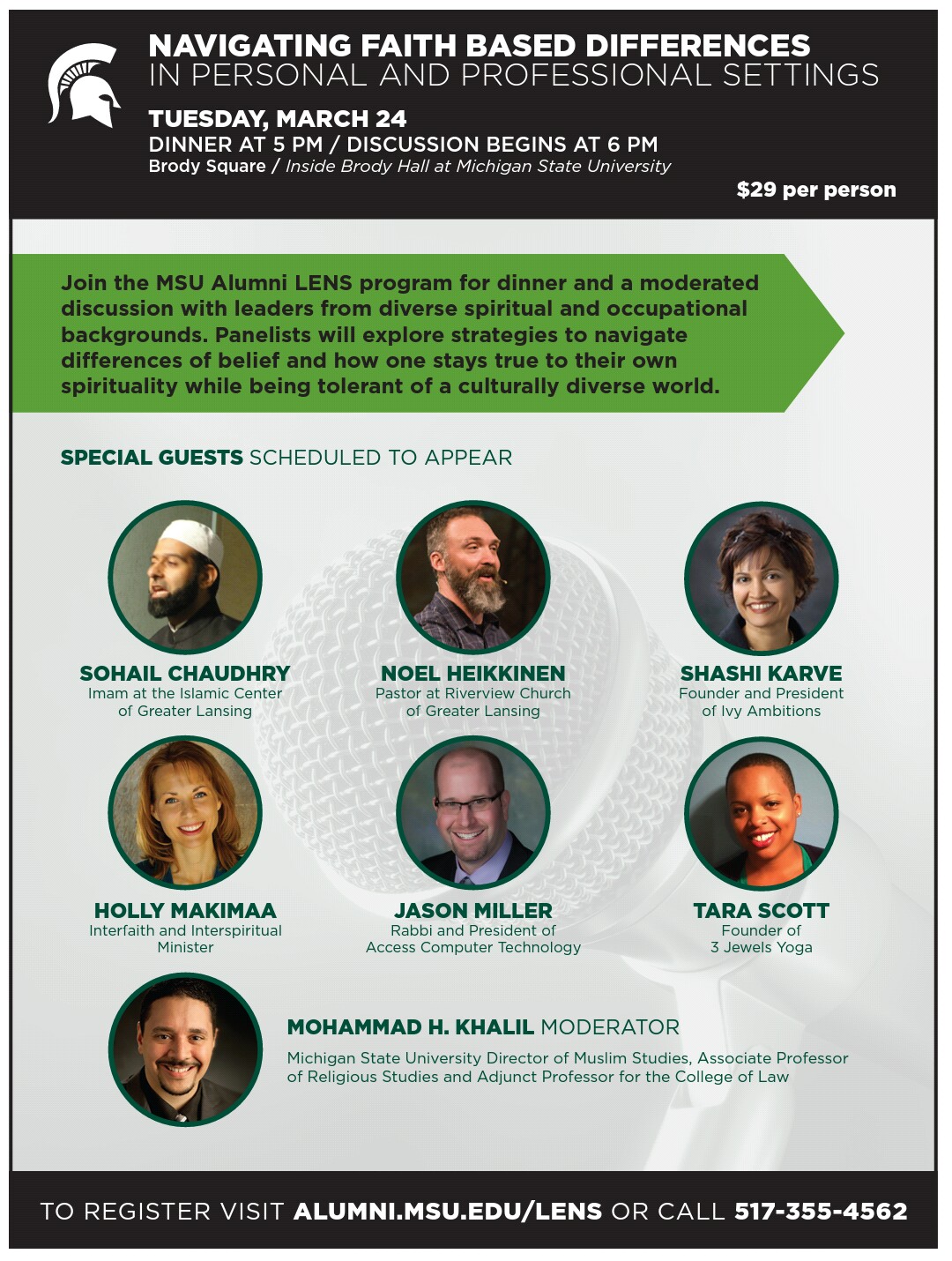
So a Rabbi, a Buddhist, an Inter-Spirtual teacher, a Hindu, a Christian + an Imam sit down at at table…

Yes, it sounds like a setup to a humorless joke but it was a joy to participate in this interfaith conversation where we planted seeds for building bridges and fostering compassionate understanding among people of various philosophies and faiths.

wpid-screenshot_2015-03-09-15-59-302.jpg.jpeg

Livestream for MSU Alumni LENS panel discussion: Navigating Faith-based Differences

Or click to view here: http://livestream.com/msualumni/FAITH

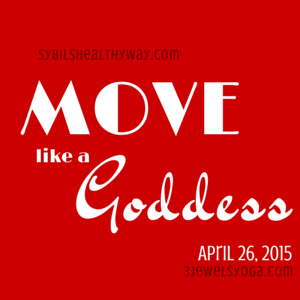
move like a goddess

move like a goddess

the invitation to move like a goddess is to inhabit your body
with full awareness.

to embrace its realities.

to tend to it in sickness and health!

to find physical activities that are meaningful and nourishing.

that don’t feel like drudgery or punishment.

that make you feel strong, healthy, capable, full of joy —
absolutely alive!

it is also an invitation to reflect on how we move through
a room, a situation, a day…our one and only life.

with head held high? with heart wide open?

grounded. centered. connected.


Awakening The Goddess : A Day of Refuge for Radical Self-Care
~ co-hosted by 3 Jewels Yoga + Sybil’s Healthy Way ~

Sunday, 19 July 2015 | 12 – 4 pm

REGISTER NOW at Sybil’s Healthy Way!

The Girl Who Got Up | TashmicaTorok.com

A truth about meditation: it can be uncomfortable or even excruciating, as my friend Tashmica so eloquently shares below.

First we meet the process of physically conditioning our bodies to find and sustain a steady posture (practice note: for me, “conditioning” means understanding how to take care of the tensions in the body not torturing ourselves to endure a rigid alignment that can create more distress). Holding the body through sitting meditation, in particular, takes time…just as training the body to walk a half marathon takes time, diligence and patience.

What we may be surprised to learn is that meditation is not “passive.” Rather, I’ve found it more accurate to frame meditation as I would yoga asana — in which we discover that the opposite of being active is not being passive; it is the more complex and dynamic energy of being receptive.

Sitting within the quiet space of receptivity, we open up to the possibility of encountering the hidden/neglected/protected parts of ourselves. With that, difficulties and discomforts may arise well before any insights or understanding that we may be longing for.

How, then, do we take care of ourselves through those moments when we discover that this practice, which is so often extolled for delivering peace, actually puts us face-to-face with the stunning reality that cultivating peace is a process…a training, not unlike a marathon. Tending to our hearts and minds requires our patience, diligence, and self-compassion.

I love that Tashmica is choosing not to give up but to keep getting up!

March Mindfulness 2015

Today I kick off my annual ‪#‎MarchMindfulness‬ campaign to promote the practice of bringing skillful + compassionate awareness to how we engage, are impacted by, and then respond to the world around us.

The Satipatthana Sutta (Discourse on The Four Establishments of Mindfulness) is a foundational text and, ultimately, guiding practice in Buddhism. It is the inspiration and heart of my ‪#‎BodyAwarenessBootcamp‬ series, which ended this afternoon, and truly the ground in which my teaching practice is rooted.

How do we fully establish ourselves in mindfulness? We are diligent in developing a clear comprehension of the realities of our body and mind. It begins with the thread of the breath:

Breathing in,
be aware that [you] are breathing in.
Breathing out,
be aware that [you] are breathing out.

Breathing in,
be aware of [your] whole body.
Breathing out,
be aware of [your] whole body.

Throughout each day this month, let us take a few moments to immerse ourselves in this level of awareness and notice what moves, blooms, dissolves, transforms and even becomes reconciled in our body, mind and heart.‪ #‎RadicalActsOfSelfCare‬