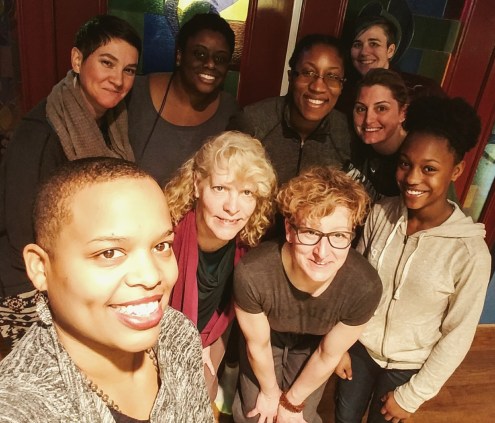
when + where we enter | weekend intensive

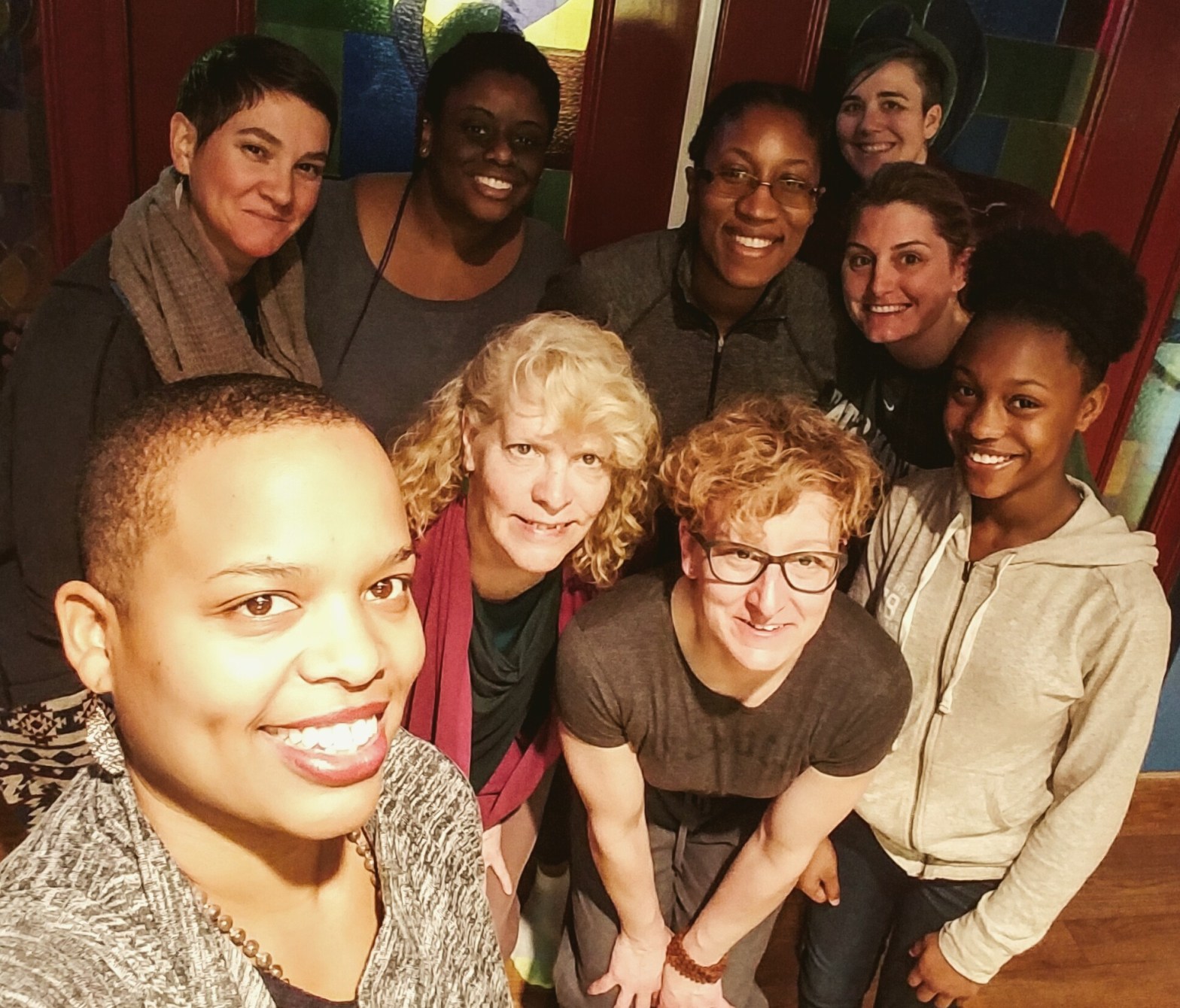
I had the great honor and joy to spend a beautiful weekend holding space for my Quaker friends to discern how we skillfully engage in practices of justice, liberation, and healing.

Leading with Spirit + Faith, practitioners were guided to focus on “discernment over data” in order to:

GET GROUNDED — Cutting through the noise in order to get clear about one’s intentions and to honestly assess what one feels compelled and equipped to do.

BUILD CAPACITY — Cultivating an intimate understanding of one’s self and one’s values; examining the ways we each embody privilege and risk as well as each individual’s unique relationship to injustice, power and oppression; fortifying one’s self through transformative practices of deep listening and skillful communication. Discerning how each of us shows up, lends our presence and privilege, and can learn to apply our skills without creating more harm.

CENTER OUR WELLNESS + PRACTICE ACCOUNTABILITY — Using sacred tools and skillful strategies to restore, nourish and sustain healing, well-being, and wholeness; and establishing the circles of trust to support our learning and growing toward compassion, connection, and reconciliation.

t scott-miller's avatarradical bodhicitta

if there is no silence, there is no stillness.
if there is no stillness, there is no insight.
if there is no insight, there is no clarity.
— tenzin priyadarshi

red cedar friends | 21 – 22 october 2017 

View original post

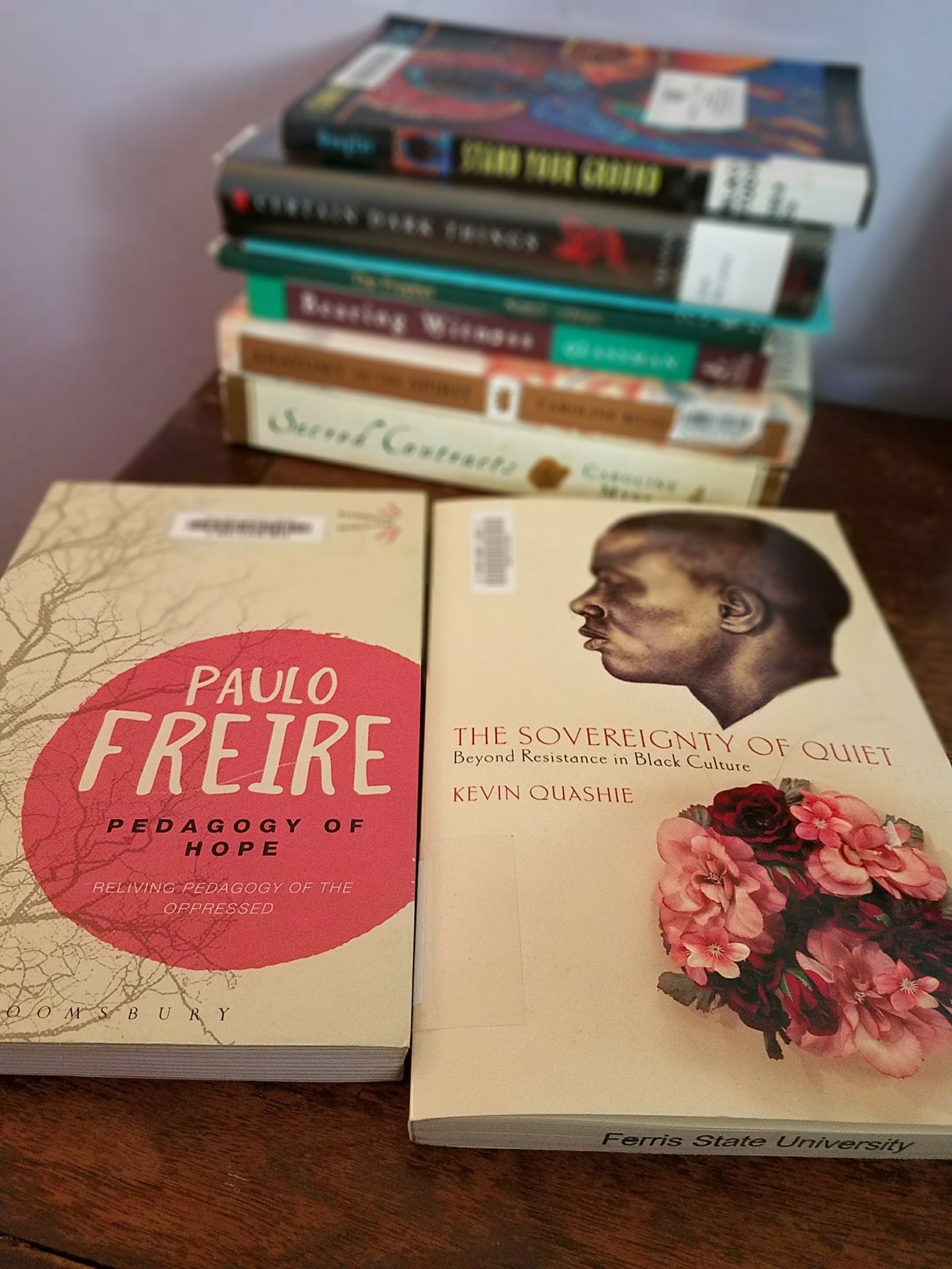
on the dharma shelf | october 2017

Pedagogy of Hope: Reliving Pedagogy of the Oppressed — Paulo Freire

“No, my hope is necessary. But it is not enough. Alone it does not win but without it my struggle will be weak and wobbly. We need critical hope like a fish needs unpolluted water.”

The Sovereignty of Quiet: Beyond Resistance in Black Culture — Kevin Quashie

“Resistance may be deeply resonant with black culture and history, but it is not sufficient for describing the totality of black humanity.

In humanity, quiet is our dignity. This quiet is represented by our interior…In its magnificence, quiet is an invitation to consider black cultural identity from somewhere other than the conceptual places that we have come to accept as definitive of and singular to black culture—not the “hip personality” exposed to and performed for the world, but the interior aliveness, the reservoir of human complexity that is deep inside…

It is this exploration, this reach toward the inner life, that an aesthetic of quiet makes possible; and it is this that is the path to a sweet freedom: a black expressiveness without publicness as its forbearer, a black subject in the undisputed dignity of its humanity.”


As a contemplative and empath who has a heart for justice, liberation and healing, this excerpt from Kevin Quashie’s book rings loud and true for me!

Don’t mistake someone’s deep-soul need (or preference or disposition) for quiet/silence as passivity or inaction. In my practice, the opposite of active is not passive. It is receptive.

Some of us need to time to cut through the noise in order to thoroughly digest and reflect on the energy and information we receive. So I value and facilitate processes of discernment and self-inquiry that help us transform “silence into language and action” (in the words of the powerhouse Audre Lorde). From this place of quiet introspection, we can cull insight, clarity and resilience to move from personal healing and transformation toward skillful action.

bearing witness | on the delusion of colorblindness

Open ya eyes wide and see the truth of the skin I’m in. #TakeItAllIn

As a Dharma practitioner, I have cultivated Sangha on the sacred grounds of the Satipatthana Sutta (the Four Establishments of Mindfulness) and, in our gatherings, turn us again and again and again back to this foundational practice that teaches us to listen deeply,

see clearly,

and “remain established in the observation of the body in the body, diligent, with clear understanding, mindful, having abandoned every craving and every distaste for this life” [Majjhima Nikaya 10, as translated in Thich Nhat Hanh’s Transformation + Healing]. So too with the observation of feelings, thoughts/mental states and perceptions of whatever is in our field of awareness as we engage the world around us.

It is a spiritual discipline to help us acknowledge, take care of, and free ourselves from our attachments (what we cling to) and aversions (what we avoid). It is a spiritual practice that fosters discernment, accountability, transformation and healing.

Our skillful understanding of how connected we all are — the principle of interdependence — does not negate or override the commitment we make to:
Show Up, Notice, Pay Attention, Be Present, Hold Space, Cultivate Silence, Listen Deeply, Bear Witness.

We own our actions (thoughts, words + deeds). We are responsible for seeing and perceiving ourselves and one another clearly and in our wholeness. Skillful Understanding supports Skillful Thinking and Skillful Action.

To avoid seeing race/ethnicity is to cling to delusion. It is neither an act of compassion or generosity and not only hinders authentic connection but flat-out undermines our capacity for justice, liberation and transformative healing.

on spiritual accounting, resistance + boundaries

​I usually tune out during commercials, but when I heard Iyanla drop this gem in a teaser for her new season of Fix My Life, I woke the hell up!

I know what resistance looks, sounds, and feels like (thank the goddess I’ve learned to own mine). And, as an empath, I’ve been admittedly agitated by recent encounters with folks harboring energies of delusion, denial, dissatisfaction and the inability to practice accountability about things that are within their sphere of influence. all of these qualities are manifestations of our resistance to spiritual growth.

If we are truly willing to do the work, then we can develop, expand and strengthen our capacity to change our perceptions — even though we may not have the power to (immediately) change our conditions or circumstances.

Spiritual accounting calls for an honest and loving look inward to:

  • discern the unresolved areas that are causing disparities between our thoughts, words, and deeds.
  • see our habit energies and patterns of behavior that keep us stuck in grooves that cause suffering.
  • tend to our wounds and move toward wholeness and healing.

I’m blessed with a circle of beloveds who hold each other down, lift each other up, and trust each other to lovingly say, “Hey, sis, your shadow is showing!

What we won’t do is co-sign one another’s craziness!

It’s okay to not be ready, to have doubts ans fears. Where I’ve learned to draw firm boundaries is with those who wear the armor of unwillingness and who are committed to their stuckness. With them, I call on the tough-love wisdom I grew up hearing: “I can’t want [your wellness/healing/wholeness] more for you than you want it for yourself.”

Uninitiated healers often spend way too much time trying to minister to wounds that aren’t theirs to heal and guide those who aren’t theirs to teach. On this, I speak from hard-won experience.

So I’ll conserve my energy, guard my intuitive spirit, filter out the lesson from the agitation, and step waaay the hell back before the connection becomes toxic.

radical bodhicitta | justice is my love language

When I took the test for the 5 love languages years ago, it came as no surprise that my primary love language is acts of service (followed by quality time).

Last Wednesday, I was invited to give a dharma talk on social justice at my root sangha and opened with Dr. Cornel West’s oft-quoted observation that:

“to be human, you must bear witness to justice.
justice is what love looks like in public —
to be human is to love and be loved.”


It is a powerful reminder that love and justice are seeded in the heart.

As often as I have revisited this quote, it was only in that moment — in the quiet, sacred space of the Temple and in the presence of fellow dharma practitioners who offered their full awareness and open hearts to bear witness to my insights about the dharma and its threads to justice — that I realized that I feel most embraced, understood, and cared for by those who speak to me from a heart centered in justice, liberation, and healing.

I receive and express love in the form of justice, liberation, and transformative healing. This is how I embody the call to serve and how I put my faith into action: by turning toward and lifting up that which helps us to reclaim and prioritize our joy, wellness, and wholeness over and above the madness of hate, violence, and oppression.

3jewels.justiceismylovelanguage


radical bodhicitta is the new digital home for my expanding work in healing justice.


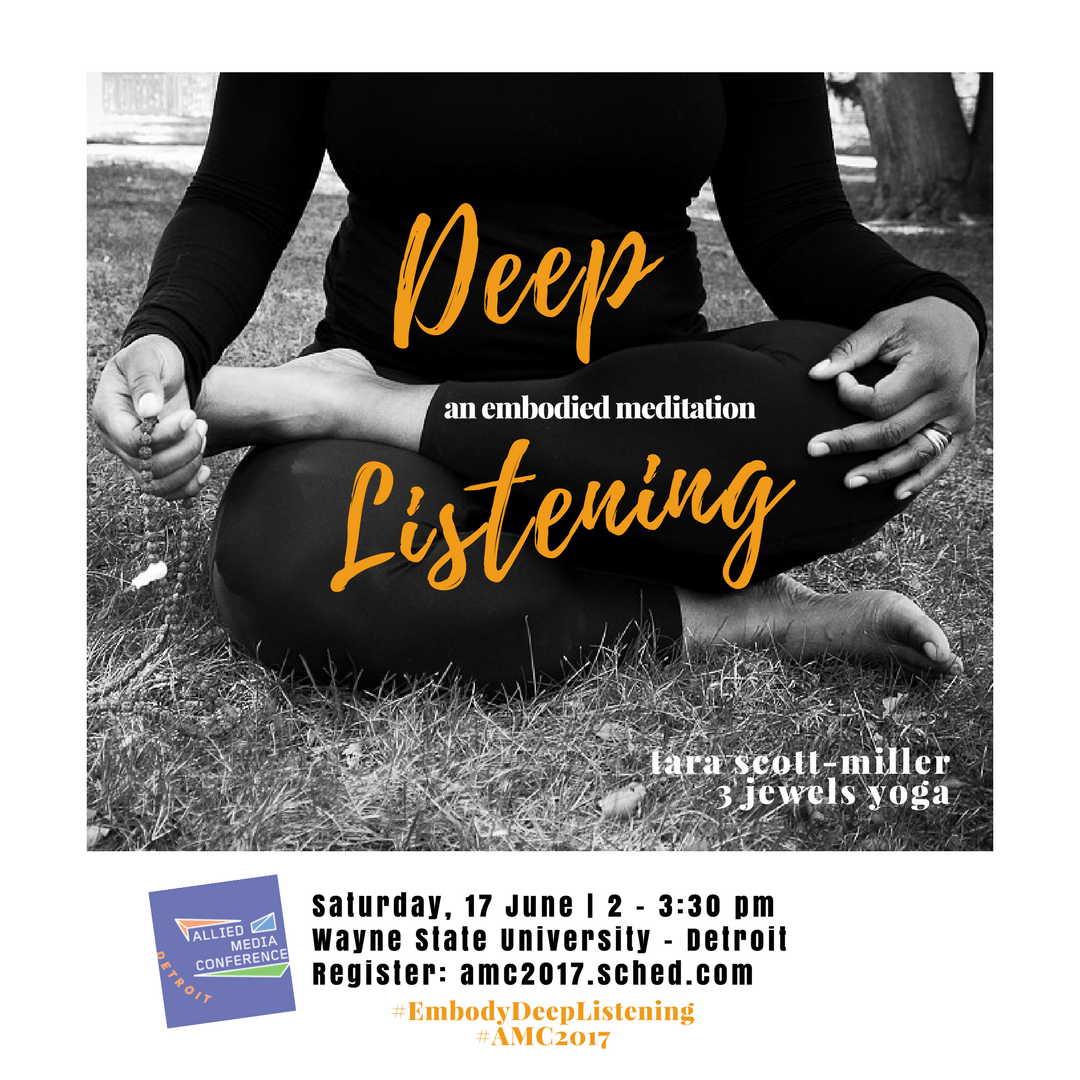
allied media conference 2017 | deep listening: an embodied meditation


3jewels.deeplisteningamc2017

Learn more about the 19th annual Allied Media Conference: alliedmedia.org/amc

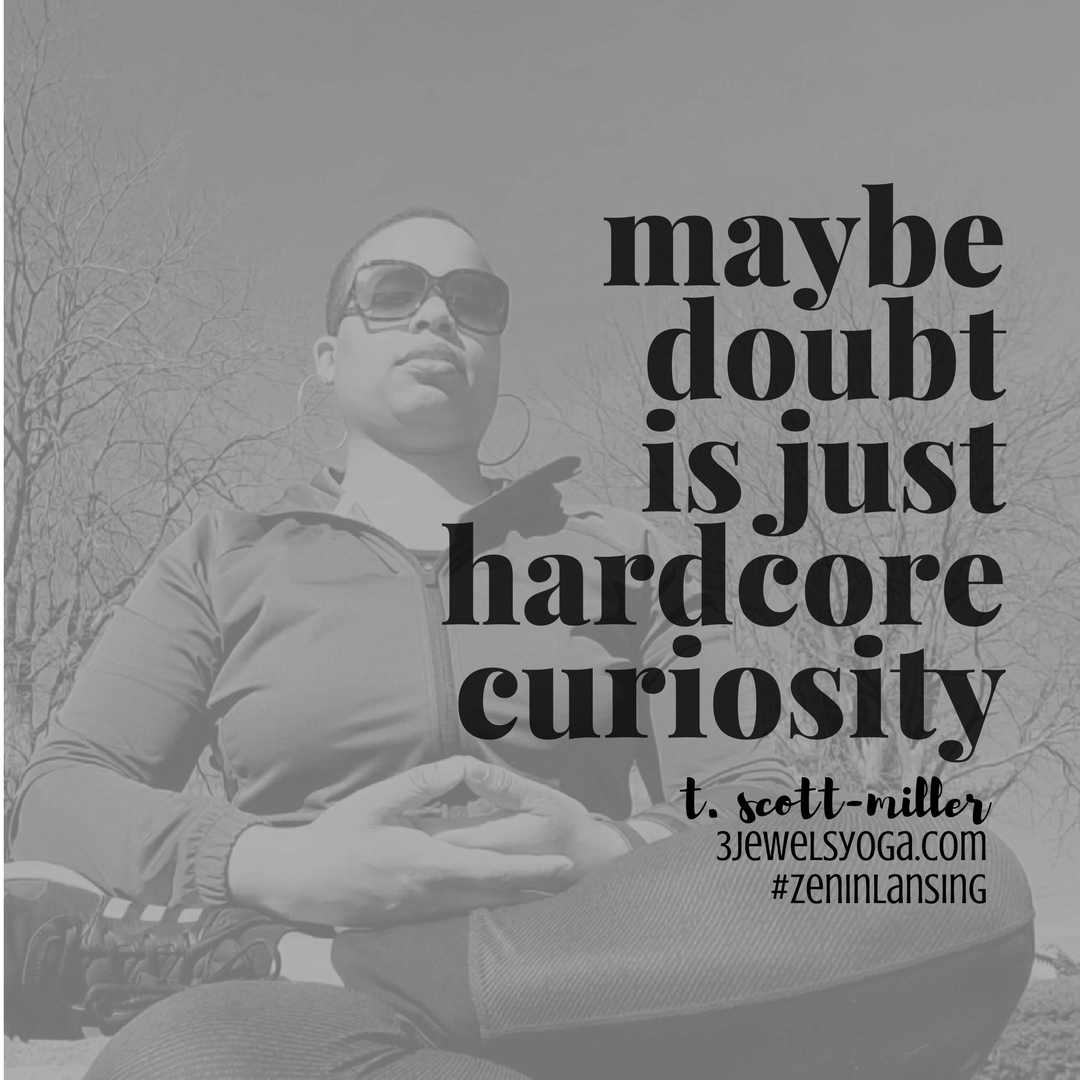
on cultivating doubt

“When there is great doubt” says a Zen aphorism that Kusan Sunim kept repeating,”then there is great awakening. This is the key. The depth of any understanding is intimately correlated with the depth of one’s confusion. Great awakening resonates at the same “pitch” as great doubt.  So rather than negate such doubt by replacing it with belief, which is the standard religious procedure, Zen encourages you to cultivate doubt until it “coagulates” into a vivid mass of perplexity…

Great doubt is not a purely mental or spiritual state: it reverberates throughout your body and your world. It throws everything into question. In developing doubt, you are told to question “with the marrow of your bones and the pores of your skin.” You are exhorted to “be totally without knowledge and understanding, like a three-year-old child.” To pose a question entails that you do not know something…To ask “What is this?” means you do not know what this is.

To cultivate doubt, therefore, is to value unknowing. To say ” I don’t know” is not an admission of weakness or ignorance, but an act of truthfulness: an honest acceptance of the limits of the human condition when faced with “the great matter of birth and death.” This deep agnosticism is more than the refusal of conventional agnosticism to take a stand on whether God exists or whether the mind survives bodily death. It is the willingness to embrace the fundamental bewilderment of a finite, fallible creature as the basis for leading a life that no longer clings to the superficial consolations of certainty.

~Stephen Batchelor, “Confessions of a Buddhist Atheist

3jewels.hardcore

when + where we enter | abiding in the practice

We closed yesterday’s daylong practice of discernment and self-inquiry by reflecting on how we aspire to show up and carry what we have learned about cultivating radical bodhicittawhat I call the heart and mind of justice, liberation, and healing — into our ever-widening circles of compassionate social action.

After everyone departed, I returned to the room to collect my belongings and stood for a few breaths to rest and revel in the full energy we had collectively generated. In that sacred pause, I looked down at my stuff scattered around me — realizing that I was embodying the wisdom that framed the final segment of our discernment. Have your heart be where your feet are. I had spent the day exactly where my heart had called me to be.

When we value and intentionally cultivate the sacred pause, we can amplify our capacity to listen deeply to the call of our hearts and see clearly the direction our feet will go.

when(ever) + where(ever) we enter, may our hearts be where our feet are. 

wp-image-913269051jpg.jpg

…we are in fact not where are feet are. We are not here. Or at least we are not all here.
The “where” that our heart is not so much a place but
a different time: past, and simultaneously, the future.
We are everywhere but in the now.
~Omid Safi
read Safi’s full column: Have Your Heart Be Where Your Feet Are

on refuge + resistance | surviving to sustain skillful action

Revolution is not a one-time event.
It is becoming always vigilant for the smallest opportunity
to make a genuine change in established, outgrown responses;
for instance, it is learning to address each other’s difference with respect.
We share a common interest, survival, and it cannot be pursued in isolation
from others simply because their differences make us uncomfortable.

We know what it is to be lied to.
The 60s should [have taught] us how important it is not to lie to ourselves.
Not to believe that revolution is a one-time event,
or something that happens around us
rather than inside of us.
Not to believe that freedom can belong to any one group of us
without others also being free.
How important it is not to allow even our leaders to define us to ourselves,
or to define our sources of power to us…

Each one of us must look clearly and closely
at the genuine particulars (conditions) of his or her life
and decide where action and energy is needed
and where it can be effective.
~ Audre Lorde

3jewels.womensmarchdeeprefuge.jpg
Post-Women’s March Deep Refuge + Restoration Circle
yesterday, we marched.
today we rest, take deep refuge and restore ourselves in the full embrace of sangha
to rise up and take action again.
~t. scott-miller


sangha study schedule

Join us in February, as we complete our three-month journey along the Noble Eightfold Path with a study the faculties of Skillful Effort, Skillful Mindfulness, and Skillful Concentration. The following month, we’ll deepen our contemplation of Justice, Liberation, and Healing — the focus of our annual call-to-action, March Mindfulness — and close out our winter series with a special full-day workshop on the topic on 3/19. View: Upcoming Practice Dates.