touching the earth | a reflection on zenju’s “Way-Seeking Mind of Martin Luther King Jr.”

As a Zen practitioner in the tradition of Thich Nhat Hanh, my study of his teachings and personal history provided a surprising lesson about the work of Dr. Martin Luther King Jr. This gleaming insight into their relationship renewed my appreciation and broadened my understanding of King’s legacy as it elucidated the global impact of his compassionate mission. Several years ago, inspired by the “inter-being” between these two leaders as well as my own dharma as a Black American woman on this path of practice, I led my root sangha in the Touching the Earth prostrations to honor King and Thay as spiritual teachers.

Since then, my Monday evening Yin+Yang Yoga class has fallen on this national holiday. Each asana that brings our hearts closer to the earth (like these two favorites: Child’s Pose + Anahatasana) becomes a prostration, in which we fully embody the mindfulness practice of remembrance and reconciliation. We remember our origins and connections: to ancestors, by blood and spirit; to this Earth that sustains us and upon which our complex and interwoven histories have been built. We may began to penetrate the deep suffering emanating from our painful histories, which continue to manifest in new forms and to impact our experiences and abilities to relate to one another because of race, religion, ethnicity, gender, sexual identity, disability and a whole slew of “differences” that seem to separate us. Breath by compassion-filled breath, we may began to reconcile these histories as we acknowledge, cradle, and heal our own suffering. We give it back to this wondrous Earth to absorb and transform it, as from the mud blooms a lotus. In every class, I invite the practitioners to cultivate compassionate understanding of their bodies, minds and hearts through the alignment of breath and posture. Generating such mindfulness and loving awareness for ourselves teaches us how to skillfully extend compassion and loving-kindness to others.When we abide in mindfulness, our senses become clear and fully attuned to the spectrum of beauty and suffering in the world.  We acknowledge our own contribution to that stream–how our actions increase beauty or increase suffering. We make amends when we cause suffering and begin anew, watering seeds of compassion. Each heart-driven act–embodied on the mat, the cushion, among our beloveds and within our communities–commemorates the King’s legacy. On this path, as teacher and practitioner, I know I am a continuation of Dr. King.

mudra 2.bw

[Originally posted 31 January 2013; Updated 20 January 2014]


Related

Zenju Earthlyn Manuel |The Way-Seeking Mind of Martin Luther Jr.
Martin Luther King Jr. | King’s Nobel Peace Prize Nomination Letter for Thich Nhat Hanh
Rev. Dr. Andrew C. Kennedy | Martin Luther King Jr. + Thich Nhat Hanh

[Broken links updated 16 January 2017]


the eightfold path: on skillful speech, skillful action + skillful livelihood

3jewels-cwestquote

Sangha is studying how we “live into community” and the purpose of gathering as spiritual friends to build our capacity for skillfulness and resilience. To that end, we’re contemplating the Eightfold Path as a set of embodied practices that help us develop wisdom, ethical action, and various faculties that support our meditation.

The Eightfold Path is the fourth of the 4 Noble Truths:

There is Suffering.
There are Causes of Suffering (craving/attachment).
There is an End of Suffering.
The Noble Path is the End of Suffering.


The wisdom pair of Skillful Understanding and Skillful Thinking carries us to gates of the three ethical actions where we may examine how silence and discernment give shape and dimension to:

Skillful Speech — What we choose to say, how we choose to say it, and when we choose to say it. Speech is a form of action (the cause of karma) that is fueled by the quality of our understanding, thinking and intentions. It may be guided by factors that create a more skillful impact (the effect of karma) in the world.*

*(I use world here to encompass our daily encounters with people, places, and all manner of things.)

Skillful Action — How we choose to respond to the world as embodied in our conduct (direct/indirect; personal/interpersonal; private/public). The behaviors/activities we engage in and abstain from that reflect the quality of our understanding, thinking, and intentions.

Skillful Livelihood — I am compelled to expand livelihood beyond its common denotation as the work we do to earn a living. This is also coupled with a desire to suss out the snares of privilege and shame that arise when we narrow in on ethical employment without considering socio-cultural and economic factors that influence where and how we work. Looking deeply at the root meaning of the word itself unearths a broad view of how we cultivate our “way of life” and includes all the choices/actions we make to nourish and sustain a sense of living well (values, interests, experiences and relationships). Our livelihood then reflects and is informed by the quality of our understanding, thinking, intentions and actions.

Our contemplation draws on Audre Lorde’s essay, The Transformation of Silence into Language and Action:

What is the quality and impact of our silence?
Where does our silence show up as fear or avoidance?
When can it cause harm?  When can it be a tool for healing? 

Where can it be shaped into a tool of resistance — a healthy boundary to guard against toxic communication?  A way of standing in our commitment to non-violent, compassionate action?
In what ways do we use meditation and practices of discernment as skillful means to transform silence into skillful speech and skillful action?


other liberating actions of the eightfold path

on skillful understanding + skillful thinking
on skillful effort, skillful mindfulness + skillful concentration


on the dharma shelf | “the transformation of silence into language + action”

“Each of us is here now because in one way or another we share a commitment to language and to the power of language, and to the reclaiming of language which has been made to work against us. In the transformation of silence into language and action, it is vitally necessary for each one of us to establish or examine her function in that transformation and to recognize her role as vital within that transformation.”

“We can learn to work and speak when we are afraid in the same way we have learned to work and speak when we are tired. For we have been socialized to respect fear more than our own needs for language and definition, and while we wait in silence for that final luxury of fearlessness, the weight of that silence will choke us.

The fact that we are here and that I speak these words is an attempt to break that silence and bridge some of those differences between us, for it is not difference which immobilizes us, but silence.

And there are so many silences to be broken.”

~ Audre Lorde, The Transformation of Silence into Language and Action

I cannot think of a reading that is more aligned with Sangha’s study of Skillful Speech, Skillful Action, Skillful Livelihood. This trio of ethical actions on the Noble Eightfold Path holds deep resonance with our commitment to living into community where inclusion and liberation are seeded, watered and nourished!

Read the full essay (via Cal State @ San Marcos).
Look back at skillful understanding and skillful thinking and the qualities of skillful communication.

on the dharma shelf | december 2016

there are no new ideas, just new ways of giving those ideas we cherish breath and power in our own living.

~ audre lorde 

In a given season I cycle through a stack of books and frequently exchange “currently reading” snap shots with my circle of family and friends. What and when I read depends both on mood/instinct and whose voice/ideas feel most compelling. It is a discernment that inevitably leads to discovering the message I most needed to hear!  

This list comprises books that were long-ago gifted or recently rediscovered that I am re-reading(*) with fresh eyes after many years. Others were recommended or “manifested” at the right time — namely, from the juju-magick of a kiosk at my local library branch where books I don’t even know I’m looking for seem to auspiciously materialize as I pass by!

  • Sister Outsider | Audre Lorde
  • Reading the Bible Again for the First Time | Marcus J. Borg
  • The Gilda Stories* | Jewelle Gomez
  • Just Mercy: A Story of Justice + Redemption | Bryan Stevenson
  • Radical Dharma: Talking Race, Love, + Liberation | Rev. angel Kyodo williams, Lama Rod Owens, Jasmine Syedullah
  • How To Free Your Mind: Tara the Liberator* | Thubten Chodron

embodying privilege + risk: the stakes is high

Some folks may not quite understand why the stakes are so high for me and those I love.

I am aware of my privileges:

I am educated. I attended a private boarding school and a private university where I earned both a Bachelor’s and a Master’s degree.
I am a U.S-born person whose 1st language is English.
I am a cis-gendered heterosexual.
I am married.
I do not live with a disability.

I also embody a space where the targeted and marginalized aspects of my identity make me vulnerable to practices, policies, and dominant cultural beliefs that have denied or would attempt to block my humanity as well as my civil rights:

I am a Black Woman.

I am the daughter of an immigrant.
My father is from Trinidad. His family has roots throughout the Caribbean.

The great-granddaughter of immigrants.
My maternal great-grandparents were Canadian.

The great-great granddaughter of an immigrant.
My maternal great-great grandmother was a German Jew who married a former slave and Civil War veteran.* 

I am the mother of a bi-racial, multi-ethnic child.
I am the wife of a man who has a disability.
We live on a fixed income.

I am a Buddhist.
I am committed to the path of compassion and liberation for myself and others.
I come from generations of women who have held positions of service in the social work, education, and public health fields.
It’s in my DNA to give a damn.

I know and love people who are targeted and vulnerable.
I know and love people who know and love people who are targeted and vulnerable:

Immigrants, non-native English speakers, lesbian, gay, same-gender loving, transgender, gender non-conforming, elderly, poor, uneducated, disabled, Muslim, Jewish, of other non-JudeoChristian faiths, atheist, agnostic and more…

I have every reason to be mad and every reason to wish to protect myself and those I love from harm!  I am committed to social justice, equity, and reconciliation. It takes emboldened truth-telling. Even as I uphold the criteria for skillful communication, I will not be silent or soft to make anyone feel more comfortable.
______

*For the curious or surprised, I offer two insights:
The family history I compiled and the regional ancestry results of my genographic test, which my reflect a genetic composition that is 65% Sub-Saharan African, 13% Mediterranean, 12% North European, 5% South African, 5% Southwest Asian.

I share these results not to diminish my Blackness but to illustrate interdependence and just how bound to one another we are.
______

A Few Places To Start:

10 Tips for Christians Supporting Trump

Allies For Change Glossary

Matrix of Oppression

Teaching Tolerance

White Privilege: Unpacking The Invisible Knapsack

mindfulness in a crisis

I close each meditation with a practice I’ve crafted over the years — with hands to the heart in gassho and a prayer of reflection:

“To honor and acknowledge ourselves and our commitment to self-understanding and well-being.

To honor and acknowledge the practice itself as it reminds us to listen deeply, see clearly and respond skillfully to what arises as it arises.

And, to honor and acknowledge one another for collectively generating the energy of mindfulness, compassion and understanding.”

Today, nowhere near the cushion, I call on this same affirmation to re-center me after a momentary family crisis. Even when others do not share my practice or draw upon similar skills in the face of madness, I honor how being a compassionate witness to their actions can help bring me back to mine.

t scott-miller's avatardhamma for mama*

Exploded and firefighters are two words you don’t want to hear from an unfamiliar caller, informing you that your mother needs you to come over to the house immediately.

Already in the car, heading in the opposite direction, with my husband thankfully behind the wheel. My first response was not to panic but to pause and assess. In reflection, I recognize: This is my brain on mindfulness.

And let me say right now that mindfulness is not a quick fix tool that I acquired after some 6-8 week stress reduction workshop. It is the result of 10-plus years as a dharma practitioner with feet grounded firmly on the Zen path and a lifetime of exploring contemplative spiritual and wellness practices that have helped recalibrate my fiery temperament “to be more able more often” to generate skillful responses.

I’ll be straight up: it doesn’t “work” all the time…

View original post 402 more words

wisdom files

Photo by Harry Cooke on Pexels.com

This is a living “library” comprised of suggested readings for Sangha and the frequently-referenced texts used in our practice, which I have also linked throughout my various writings over the years. It is certainly not intended to be comprehensive.

Rather it reflects my personal approach to this spiritual path of study and practice — informing what I teach and how I facilitate the rich conversations that support our learning and growing together as a spiritual community.


Foundational Wisdom Teachings

3 Jewels/3 Refuges: The Buddha, The Dharma, The Sangha

The Three Jewels | Buddha 101
Taking Refuge | Plum Village
The Three Refuges (Audio) | Plum Village

4 Noble Truths: There is Suffering, There are Causes of Suffering, There is an End of Suffering, The Noble Path is the End of Suffering

The Buddha’s Four Noble Truths | Sylvia Boorstein
True Love + the 4 Noble Truths | Thich Nhat Hanh
What Are the 4 Noble Truths? | Melvin McLeod

4 Foundations of Mindfulness: Contemplation of Body, Contemplation of Feeling, Contemplation of Consciousness, Contemplation of Mental Objects

Embodied Practice: 4 Foundations of Mindfulness | 3 Jewels Yoga
Embodied Practice: Sutra on Mindful Breathing | 3 Jewels Yoga
Transformation and Healing: Sutra on the Four Establishments of Mindfulness |         Thich Nhat Hanh

5 Mindfulness Trainings: Reverence for Life, True Happiness, True Love, Loving Speech + Deep Listening, Nourishment + Healing

5 Mindfulness Trainings | Plum Village
— For A Future To Be Possible | Thich Nhat Hanh
     2 versions: Commentaries on the 5 Mindfulness Trainings [1993]
                         Buddhist Ethics in Everyday Life [2007]

5 Spiritual Faculties: Trust, Wisdom, Mindfulness, Concentration, Diligence
Perspectives on the 5 Spiritual Faculties | 3 Jewels Yoga

8-Fold Path: Skillful Understanding, Skillful Intent, Skillful Speech, Skillful Action, Skillful Livelihood, Skillful Effort, Skillful Mindfulness, and Skillful Concentration
I have a particular fondness for the use of the word “skillful”  here; various translations of the Buddhist Canon also describe these eight practices of the “Middle Way” as “right” or “wise.”

Contemplations on Skillful Understanding + Thinking  | 3 Jewels Yoga
Contemplations on Skillful Speech, Action + Livelihood  | 3 Jewels Yoga
Contemplations on Skillful Effort, Mindfulness + Concentration  | 3 Jewels
The Eightfold Path | Buddha 101
The Way to End Suffering | Bhikku Bodhi
Discourse on the Middle Way | Plum Village
Beyond the Self: Teachings on the Middle Way | Thich Nhat Hanh


The Dhammapada

— Annotated + Explained | Max Müller + Jack Maguire
Access to Insight
— BuddhaNet
— Gil Frondsal


Insights on Practice + Study

On Sangha + Spiritual Friendship

— Creating Inclusive + Welcoming Buddhist Sanghas in the U.S. | Mushim Patricia Ikeda
— The Fertile Soil of Sangha | Thich Nhat Hanh
— Gathered + Rooted | 3 Jewels Yoga
— Good Spiritual Friends | 3 Jewels Yoga
— The Sangha Without Thich Nhat Hanh | Matt Gesicki
— The Suchness of Sangha | 3 Jewels Yoga

Works by Zenju Earthlyn Manuel

— Tell Me Something About Buddhism

Works by Thich Nhat Hanh

— Breathe, You Are Alive!
— Friends on the Path: Living Spiritual Communities
— Living Buddha, Living Christ
— Zen Battles: Modern Commentary on the Teachings of Master Linji
[alternate title: Nothing To Do, Nowhere To Go]


Related Eastern Wisdom Teachings

Bhagavad Gita
— Annotated + Explained | Shri Purohit Swami + Kendra Crossen Burroughs
— Stephen Mitchell

Tao Te Ching
— 
Annotated + Explained | Derek Lin
— Stephen Mitchell


Radical Bodhicitta Reading History

In 2014, I facilitated a community-based dialogue entitled Toward Wholeness on the intersections of spirituality, identity (ability, race, culture, gender, sexuality) and embodied awareness. Sangha deepened its inquiry and study of our complex embodied experiences with the study of Zenju’s book, The Way of Tenderness, in the winter of 2015. Contemplations on how we are seen, heard, felt, understood, cared for and supported — and cultivate the capacity to extend such care to others — have become integral to Sangha’s practices of healing, transformation and liberation.

3 Jewels Yoga Sangha
— Body As Nature Series
Transformative Love Series
Embodying Refuge, Resistance, Resilience + Radical Self-Expression Series

Buddhist Peace Fellowship
— Gender Dysphoria and The Dharma
— White Privilege + the Mindfulness Movement

Everyday Feminism
— 9 Ways We Can Make Social Justice Movements Less Elitist + More Accessible
— I’m Not a Person with a Disability. I’m a Disabled Person.

Zenju Earthlyn Manuel
— I Can Breathe: A Meditation Surviving Acts of Hatred
— The Way of Tenderness

Relevant Magazine
— 4 Misconceptions About Mental Illness + Faith
— How Church Can Lead Racial Reconciliation
— Why Are Sunday Mornings Still So Segregated

The Body Is Not An Apology
— Did You Do Any of These 6 Activities Today? Then You Have Class Privilege
— Lucky To Be Alive: The Everyday Ways We Tell People with Disabilities They Should Not Be Here
Nobody Bothers To Ask: The Challenges of Being Sexual in disabled/trans/genderqueer/etc..Body

angel kyodo williams
 Radical Dharma
— Social Justice + Buddhism

 Tim Wise
— Fighting the Normalization of Inequality 

Larry Yang
Awakening Together: The Spiritual Practice of Inclusivity + Community
— Directing The Mind Towards Practices in Diversity
— Remembering What It Means To Be Gay
— Toward A Multicultural Buddhist Practice


Updated 15 February 2019

Elder Wisdom: Ruby Sales | On Being with Krista Tippett

Terence Crutcher. Another innocent, unarmed black man was assasinated. Unarmed. In need of help. In the middle of the highway.

Gunned down. On film. Demonized for simply existing. By another white cop.

Real talk: I don’t have enough skillfulness to see beyond the savagery of this act. The savagery of white cops who are authorized to wage war on black and brown bodies without repercussion, on a whim of a notion hastily stitched together by any misperceived glimpse of what?! suscipious movements or weapons?! direct or implied threat?!

Nope, plain and simple: their hate-fear and our melaninated skin.

I sat down to have lunch, inhaled the fragrant broth, and exhaled tears. In that moment I touched the amorphous and unameable feeling, which had been building for days (at turns, subdued by moments of refuge with beloveds and then piqued by a few personal and familial woes): A quiet deep-down hum of dread.

Dread…that we are doomed to the misery of oppression and supremacy no matter how many good white folks divest of their racism, bias, and fear and leverage their privilege to enter into the good work of liberation and justice. Dread that systemic change is too slow, that the real and apparent need for the transformation of millions of hearts and minds is inconceivable.

Dread that if I hear one more story like this, I won’t find my way back to the center from the cliff’s edge of my compassion.

I needed to hear this today. It had been in my queue of Must-Listen-To’s, and I woke to a text from my dear (white) friend telling me that she was in the middle of listening to it this morning. I was meant to hear it. So I sat with my dread and tears and listened deeply to the voice of elder wisdom.

It was salve and comfort — as nourishing as my steamy bowl of spiced broth and noodles. A touchstone to what holds most heart and meaning for me in building an inclusive spiritually-centered community of refuge where we can restore our wholeness, commit to nurturing skillful relationships, and engaging in practices that bring about reconciliation.

The dread dissipated. Still I make room for its return.

Thankful for these gems of wisdom from human rights activist and public theologian Ruby Sales.

Cry of Liberation: Black Lives Have Always Mattered

Let me just say something about Black Lives Matter. Although we are familiar with it within a contemporary context, that has always been the cry of African Americans from the point of its captivity, through enslavement, through Southern apartheid. And Northern migration and de facto segregation was the assertion that black lives matter in a society that said that black people were property, in a society that said that black lives did not matter.

Spiritual Crisis of White America

there’s a spiritual crisis in white America. It’s a crisis of meaning, and I don’t hear — we talk a lot about black theologies, but I want a liberating white theology. I want a theology that speaks to Appalachia. I want a theology that begins to deepen people’s understanding about their capacity to live fully human lives and to touch the goodness inside of them rather than call upon the part of themselves that’s not relational. Because there’s nothing wrong with being European American. That’s not the problem. It’s how you actualize that history and how you actualize that reality. It’s almost like white people don’t believe that other white people are worthy of being redeemed.

And I don’t quite understand that. It must be more sexy to deal with black folk than it is to deal with white folk if you’re a white person. So as a black person, I want a theology that gives hope and meaning to people who are struggling to have meaning in a world where they no longer are as essential to whiteness as they once were.

Love, Outrage + Redemptive Anger

...love is not antithetical to being outraged. Let’s be very clear about that. And love is not antithetical to anger. There are two kinds of anger. There’s redemptive anger, and there’s non-redemptive anger. And so redemptive anger is the anger that says that — that moves you to transformation and human up-building. Non-redemptive anger is the anger that white supremacy roots itself in. So we have to make a distinction. So people think that anger, in itself, is a bad emotion, and it’s where you begin your conversation.

I became involved in the Southern Freedom Movement, not merely because I was angry about injustice, but because I love the idea of justice. So it’s where you begin your conversation. So most people begin their conversation with “I hate this” — but they never talk about what it is they love. And so I think that we have to begin to have a conversation that incorporates a vision of love with a vision of outrage.

And I don’t see those things as being over and against each other. I actually see them — you can’t talk about injustice without talking about suffering. But the reason why I want to have justice is because I love everybody in my heart. And if I didn’t have that feeling, that sense, then there would be no struggle.

On Human-ness: Universality + Particularity

What it means to be humans. We live in a very diverse world, and to talk about what it means to be humans, is to talk with a simultaneous tongue of universality and particularities. So as a black person to talk about what it means is to talk about my experience as an African American person, but also to talk about my experience that transcends being an African American to the universal experience.

So I think it — we’ve got to stop speaking about humanity as if it’s monolithic. We’ve got to wrap our consciousness around a world where people bring to the world vastly different histories and experiences, but at the same time, a world where we experience grief and love in some of the same ways. So how do we develop theologies that weave together the “I” with the “We” and the “We” with the “I?”

HEAR HERE [for deep listening]: Ruby Sales | “Where Does it Hurt?”
READ [for clear-seeing]: Transcript 
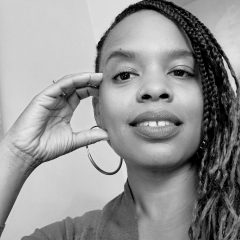


spirituality, social justice + healing spaces

 bookends to my summer:
two radical events steeped in activism, equity + healing.
drawn into these moments by either
an endorsement or invitation from dear friends —

i arrived without expectation,
holding the intention to be present + open-hearted.
i departed: aligned, affirmed + inspired.
fully nourished, energized + equipped to continue the good work.

18th annual
allied media conference
wayne state university | june 19, 2016

It was truly an honor to have been a part of the Allied Media Conference‘s healing justice practice space where I led a session on cultivating embodied self-compassion. To my surprise, the beautiful souls who joined me filled the room with breath, loving awareness, and the good energy they carried from Ann Arbor, Detroit, Colombia, Peru, Ecuador, Montreal, Seattle, Boston, NYC, Maryland and Mississippi!

Afterward, I had the pleasure of connecting with Nse Umoh Esema, Program Director of MIT CoLab, and Sofia Campos, a student affiliate of the center. Our conversation became part of an interview they selected to be featured among CoLab Radio’s profiles on how “workshop facilitators from the 2016 Allied Media Conference use collaborative processes grounded in media, art and technology to address the roots of problems and advance holistic solutions towards a more just and creative world.”

what i experienced + witnessed

freedom of movement, creativity, + being
joy of human expression in body, voice + spirit
abundant power of  multi-generational, multicultural, multi-gendered collaborative energy

_______

learn: allied media
meditatethe practice of arriving
read: how to awaken self-compassion through meditation

_______


buddhist peace fellowship’s dharma + direct action workshop
zen temple of ann arbor | sept 3 + 4, 2016

I spent a week slowly emerging from the dharma bubble created by the cumulative energy of holding and being immersed in a healing-centered space with compassionate, justice-minded folk committed to integrating spirituality with social awareness. There’s still much content to process and unpack! But I’m excited to share this glimpse into our weekend of laughter (or “blessed foolishness,” as my friend so-aptly sanctified it), truth-telling, idea-sharing, and fellowship over thoughtfully-prepared meals and simulated exercises in direct action.

amplified and affirmed

I experienced the buzz and boom that arises from living in alignment with my deepest values and connecting with others who are doing the same! Below are two contemplations that I’ve sat with over time, unpacked with my circle of good spiritual friends and, with diligence and discernment, have integrated into embodied practices. It was gratifying to not only voice them in this larger forum of peers, but to also hear them amplified and affirmed throughout the weekend of training.

  • My discomfort with and desire to dismantle hierarchies of learning where one person is positioned to bear and transmit knowledge — often deferring to age, experience, education. I’ve always approached teaching as the facilitation of a process or experience rather than the imparting of instruction and information. That one-way funnel creates a sense of bloodletting that leaves me feeling drained. So I encourage a collaborative dynamic wherein practitioners learn to trust and be accountable for building their capacity to integrate new information in ways that develop skillful action and wisdom.Whether in friendships, spiritual communities, professional environments, or social activist circles, how can give room for the range of understanding — newly-formed queries and untested ideas, emerging insights, and seasoned wisdom — from elders and youth alike? By embodying “the posture of the listener” and learning alongside one another as tutors.
  • In discerning how to skillfully inhabit the role of a sangha builder and facilitator, I resonated deeply with the teachings of Master Linji (chronicled in Thich Nhat Hanh’s Nothing To Do, Nowhere To Go) who offered a more equitable view of teacher and student in the form of guest and host. Challenging traditional notions of occupying an elevated status as guru or “master,” Linji radically accepted and encouraged the fluidity between roles — where guest becomes teacher and teacher the guest. Just as Linji considered himself to be a good spiritual friend, we can expand our idea and practice of being an “ally” to one who embodies the deep care and commitment to support the liberation and well-being of others.

a few shining examples

Ideas and practices offered by the facilitators (marked BPF) and a fellow participant.

  • Block Harm. Build Solutions. Be Present to What Arises. (BPF) — The three elements around which the Buddhist Peace Fellowship centers its approach to integrating spirituality and social justice.
  • Communicate Access Needs (BPF) — Naming the accommodations, considerations or support we need to best access the learning.
  • Cultivate Sympathetic Joy for Marginalized Communities (BPF)– Neither spiritual nor activist groups are immune to the sting of white privilege, guilt, shame, defensiveness, confusion, fragility and misperception. The complex process of healing and reconciliation is different for the marginalized and the for privileged (especially, when there is a mixed level of capacity, experience, understanding and resilience). Engaging in justice work together all too often re-exposes marginalized folks to the very same toxic thoughts and behaviors that are rooted in systems of oppression. This triggers deep hurts that can hinder or derail the collective endeavor toward impactful change. So it is critical to provide refuge–time and separate safe space–to center, care for, and protect the mental/emotional/spiritual/psychological needs and well-being of people of color, disabled persons, LGBTQ people, and others.

To that end, the facilitators established caucuses based on racial identity. (True story: this elicited a moment of cognitive dissonance for me and later sparked a conversation with my dear friend and training companion on earned trust, which merits its own post.) In this process, white practitioners were asked to recognize that part of “doing their own work” as allies/good spiritual friends is to block harm. They were also invited to draw on the spiritual faculty of mindfulness and turn their gaze inward, looking deeply into any arising discomfort/fear/resistance and transforming it into sympathetic joy for our safety and well-being.

  • Develop + Refine Skillful Listening — Deep Listening and Skillful Speech are core principles and foundational practices for Buddhists. So it was hardly surprising that, when asked to pick a dharma superpower to use in direct action exercise, several of us chose the power of listening. During the discussion that followed the exercise, we were able to unpack the challenges and limitations of our capacity to listen in heightened emotional circumstances and reminded, in particular, of the many biases that further hinder it. A fellow practitioner offered the insight of the four levels of listening, which she later sent to me:

1. Listening from the cocoon where everything sounds like the people from Charlie Brown talking.
2. Listening for whether people are for or against you.
3. Listening empathically.
4. Listening people into their own wisdom.

  • Vow Not To Burn Out (BPF)  — Referencing Mushim Patricia Ikeda’s Great Vow for Mindful Activists, the facilitators spoke to the real and unmerciful impact of justice work on our well-being: secondary trauma, burn out, compassion fatigue, physical harm and ill health. To sustain our engagement, we again call on the Buddhist wisdom of looking deeply with equanimity into how we balance our aspirations with our available resources to take/sustain action. We then assess our present-moment capacity within the frame of the “long view”– imagining how now-based actions reach into the future to touch generation after generation, as indigenous elders teach. Alongside of such honest evaluation, we honor and tend to our well-being with healthy practices that restore, energize and ground us!

As we embrace and live out the call to serve and create a more just world, may we cradle in our hearts this beautiful question lifted up in the training: “In this moment, what best serves life?”

_______

learn: buddhist peace fellowship
_______

manifestoes on love

This slideshow requires JavaScript.

i’m celebrating my 40th year today — reflecting on the journey of the past decade and more recent season of discernment that have beckoned me to live into the deep and urgent call to be an instrument of love and reconciliation.

as many of you land on my site today, i invite you to amplify the good and spread love wherever you see/feel its lack in your circle of connections.

birthday wish: for those near and far — support my efforts to cultivate and abide in the energy of compassion, skillful understanding, and connection by following, sharing, and joining the 3 Jewels Yoga community.